V&A
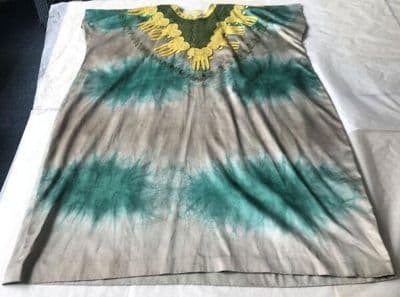
Grey Green Tie-Dye Duchess Satin Caftan Dress
1970s · 1970s · Nigerian
Designer
Shade Thomas-Fahm
Production
artisan-craft
Material
duchess satin
Culture
Nigerian
Movement
African cultural renaissance · Hippie / Counterculture
Influences
traditional African tie-dye · 1970s caftan silhouette
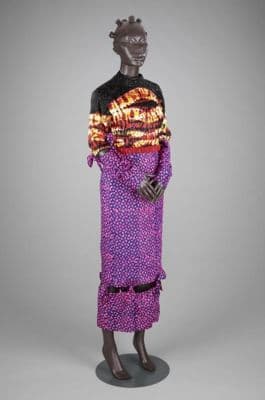
A flowing caftan-style dress constructed from duchess satin featuring horizontal tie-dye bands in teal green, grey, and cream. The garment displays a loose, unstructured silhouette with wide sleeves and appears to fall to ankle length. Golden yellow fringe or trim decorates the neckline area, creating a focal point against the muted tie-dye pattern. The tie-dye technique creates soft, organic transitions between color zones, with the darkest teal concentrated in bands across the chest and lower portion. The duchess satin gives the garment a lustrous surface that would catch light beautifully. This represents the fusion of traditional African textile techniques with contemporary 1970s silhouettes, reflecting the cultural renaissance in post-independence Nigeria.
dressloose fitv-neckknee length
Connected To
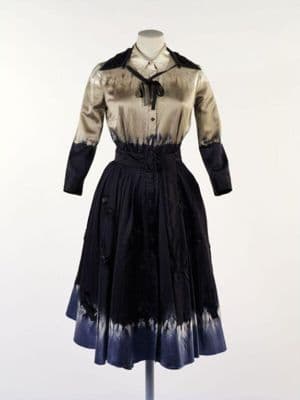
Movement·Hippie / CountercultureMotif·abstract-organic
LINEAGE30 years · cross-culture→ directed
Lineage: “hippie tie-dye techniques”
Echoes Across Time
Pull the Thread→
Follow this garment wherever the graph leads