V&A
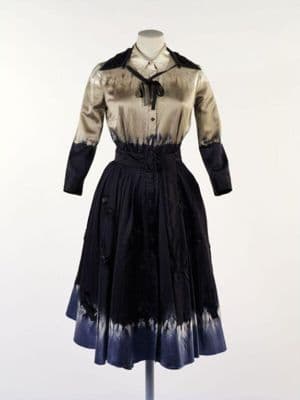
Tie-Dyed Silk Shirt Dress with Beaded Appliqués
1970s · 2000s · Italian
Designer
Prada
Production
ready-to-wear
Material
silk
Culture
Italian
Movement
Hippie / Counterculture
Influences
1950s shirt dress silhouette · hippie tie-dye techniques
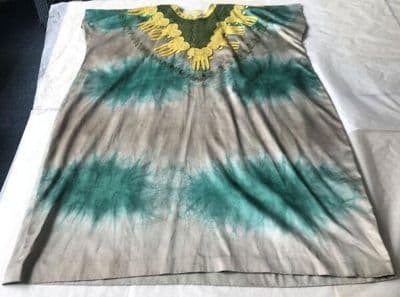
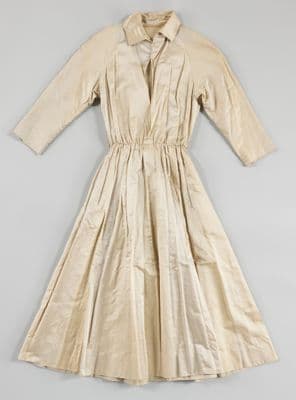
A sophisticated shirt dress featuring a tie-dyed silk construction with beige upper bodice transitioning to black sleeves and lower sections. The garment displays a classic shirt collar and button-front closure, with three-quarter sleeves in contrasting black silk. A wide black silk belt cinches the natural waist, creating a defined silhouette above a full A-line skirt. The skirt hem features a navy blue border treatment. Beaded appliqués accent the collar area, adding textural interest to the smooth silk surface. The tie-dye technique creates organic color transitions typical of early 2000s luxury fashion's embrace of artisanal effects within refined silhouettes.
dressfit and flareround neckmidi
Connected To
Designer·Prada
SHARED10 years · cross-culture · cross-category
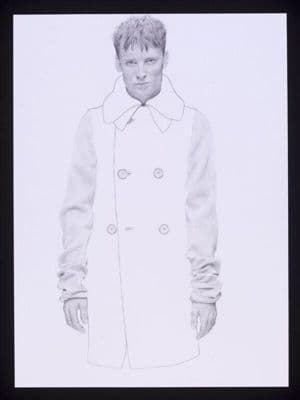
That 1970s tie-dyed dress with its crisp collar and cinched waist carries the same architectural precision that would later define Miuccia Prada's minimalist vision—the way structure emerges from apparent casualness. The pale overcoat, stripped of ornament but weighted with perfect proportions, represents Prada's full evolution into intellectual luxury, where a flawless shoulder line does all the talking.
Pull the Thread→
Follow this garment wherever the graph leads