V&A
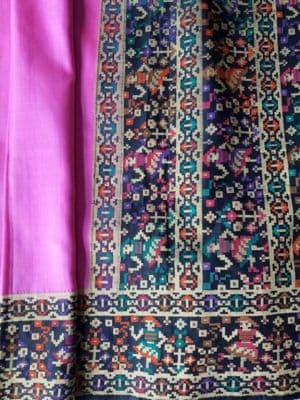
Bright Pink Artificial Silk Sari with Geometric Border
1970s · 1970s · Chinese
Production
mass-produced
Material
artificial silk
Culture
Chinese
Movement
Hippie / Counterculture
Influences
early computer graphics · pixelated digital aesthetics
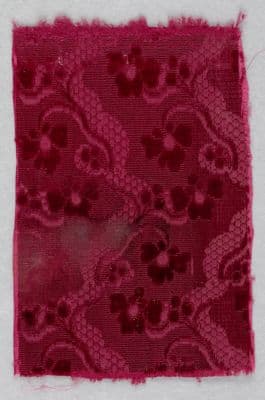
A vibrant artificial silk sari featuring a bright pink field with an elaborate geometric border design. The border displays a complex pattern of small cubed figures and motifs arranged in grid-like formations, rendered in navy blue, turquoise, orange, and other colors against the pink ground. The geometric styling shows pixelated or computer-inspired aesthetics characteristic of 1970s design trends. The border pattern includes multiple bands of varying widths, with the main decorative field containing what appears to be stylized human or animal figures within geometric frameworks. The artificial silk has a smooth, lustrous surface typical of synthetic fabrics from this period, and the overall composition demonstrates the fusion of traditional Indian garment structure with contemporary geometric design sensibilities.
dressfloor length
Connected To
61%
Worn with·blouseWorn with·petticoatFunction·festival-celebration
SHARED10 years · cross-culture
Pull the Thread→
Follow this garment wherever the graph leads