V&A
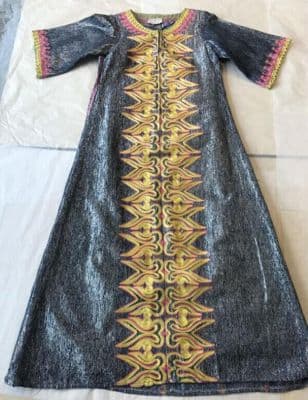
Silver Lurex Embroidered Caftan Dress
1970s · 1970s · Nigerian
Designer
Shade Thomas-Fahm
Production
artisan-craft
Material
silver lurex
Culture
Nigerian
Movement
Hippie / Counterculture
Influences
traditional Nigerian agbada · 1970s metallic fashion
A floor-length caftan-style dress constructed from silver lurex fabric with a metallic sheen. The garment features a central vertical panel of elaborate geometric embroidery in gold and burgundy threads, creating diamond and angular motifs that run from neckline to hem. The embroidery work shows traditional Nigerian design elements with precise geometric patterning. Three-quarter length sleeves are trimmed with matching embroidered borders. The dress has a simple round neckline and flows straight from shoulders to floor in an A-line silhouette. The lurex base fabric catches light while the contrasting embroidered panel creates a strong vertical focal point, representing the fusion of traditional Nigerian textile arts with 1970s metallic fashion trends.
dressstraightround neckmaxi
Connected To
Movement·Hippie / CountercultureTechnique·machine-weavingFunction·festival-celebration
Pull the Thread→
Follow this garment wherever the graph leads