V&A
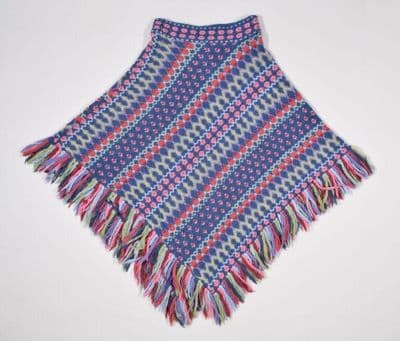
Hand-Knitted Shetland Wool Fair Isle Poncho
1970s · 1970s · British
Designer
Kaffe Fassett
Production
handmade
Material
Shetland wool
Culture
British
Movement
Craft Revival Movement · Hippie / Counterculture
Influences
Fair Isle knitting tradition · 1970s handcraft revival
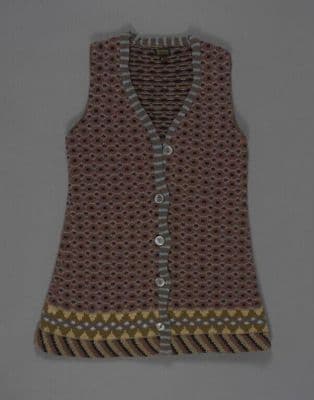
A triangular knitted poncho featuring intricate Fair Isle-style colorwork in diagonal bands. The piece displays alternating rows of geometric patterns in navy blue, pink, purple, and cream, creating a rhythmic striped effect across the triangular form. Hand-knitted in fine Shetland wool, the garment shows precise tension and even stitching throughout the complex colorwork. The bottom edge is finished with a substantial fringe in matching colors, adding movement and texture. The high neckline creates a cowl-like drape when worn. This represents the era's embrace of handcraft revival and bold pattern mixing within artistic fashion circles.
capetenthigh neckhip length
Connected To
83%
Designer·Kaffe FassettInfluences·Fair Isle knitting traditionMovement·
Pull the Thread→
Follow this garment wherever the graph leads