V&A
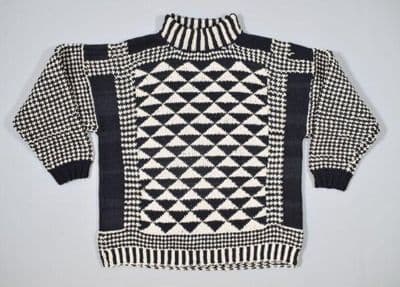
Hand Knitted Cotton Geometric Pattern Sweater
1980s · 1980s · Japanese
Production
handmade
Material
hand knitted cotton
Culture
Japanese
Movement
New Romanticism · Power Dressing
Influences
Fair Isle knitting tradition · Japanese geometric textile design
A hand-knitted cotton sweater featuring bold geometric patterns in black and white. The central panel displays a repeating diamond or triangle motif, flanked by vertical black panels and sleeves with small-scale houndstooth or check patterns. The high ribbed collar, cuffs, and hem are striped in alternating black and white bands. The construction shows traditional Fair Isle or intarsia knitting techniques, creating distinct color blocks without floats on the reverse. The oversized silhouette with dropped shoulders reflects 1980s proportions, while the monochromatic geometric patterning demonstrates Japanese design sensibilities of the era, emphasizing contrast and mathematical precision over organic forms.
sweaterregular fitturtle neckhip length
Connected To
68%
Influences·Fair Isle knitting traditionTechnique·knitting
SHARED10 years · cross-culture · cross-category
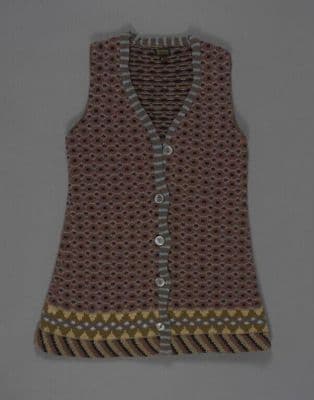
These two pieces trace the global migration of Fair Isle's geometric vocabulary, but with telling cultural translations. The 1970s British waistcoat stays true to the tradition's earthy palette and vest format—burgundy, cream, and yellow in tidy horizontal bands that speak to countryside practicality.

Pull the Thread→
Follow this garment wherever the graph leads