← All Functions
leisure-resort
204 garments across eras and cultures
Garments



Connections
204 garments across eras and cultures
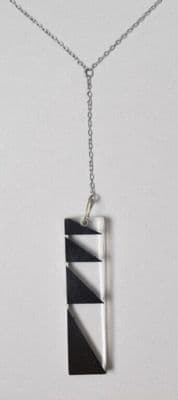
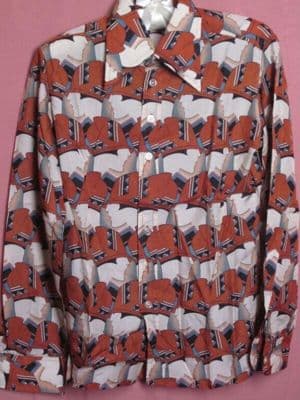
That russet shirt's tessellated cubes and the pendant's stark chevron ladder both spring from the same mid-century obsession with geometric precision, but they reveal how Op Art's visual tricks traveled different paths. The shirt domesticates Bauhaus geometry into something wearable for daily life—those interlocking forms creating a subtle optical shimmer across the torso—while the pendant distills the movement's high-contrast drama into pure statement jewelry.