V&A
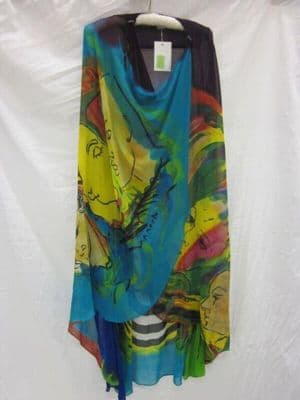
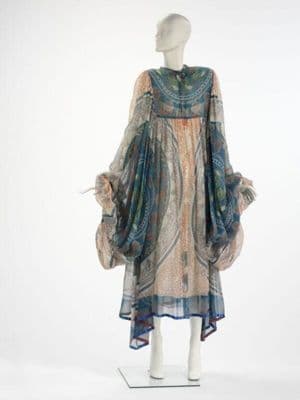
Teal Coral Geometric Silk Chiffon Evening Caftan
1970s · 1960s · British
Production
ready-to-wear
Material
printed silk chiffon
Culture
British
Movement
Space Age fashion · Hippie / Counterculture
Influences
Middle Eastern caftan · Japanese kimono draping
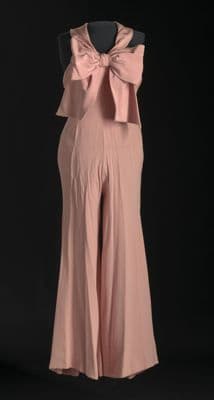
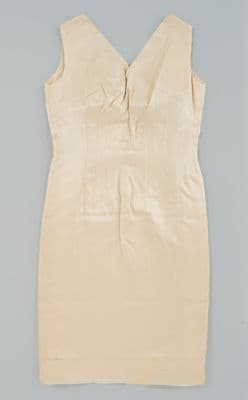
A floor-length evening dress constructed from lightweight printed silk chiffon in an abstract geometric pattern of teal, coral, and cream tones. The garment features a loose, flowing silhouette with wide, draped sleeves that extend beyond the hands, creating wing-like proportions. The neckline appears to be a simple round or boat neck. The dress falls straight from the shoulders without waist definition, embodying the Space Age aesthetic's rejection of traditional corseted silhouettes. The sheer quality of the chiffon creates layered transparency effects, while the bold geometric print reflects the era's fascination with modernist design and psychedelic patterns. The overall construction emphasizes comfort and movement over structured tailoring.
dresstenthigh neckmidi
Connected To
Influences·Middle Eastern caftanTechnique·drapingMotif·abstract-organic
Echoes Across Time
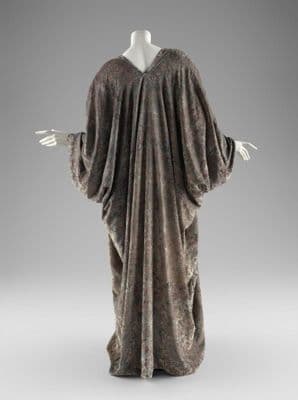
1970s → Roaring Twenties / Art Deco · 40yr70%
SHARED
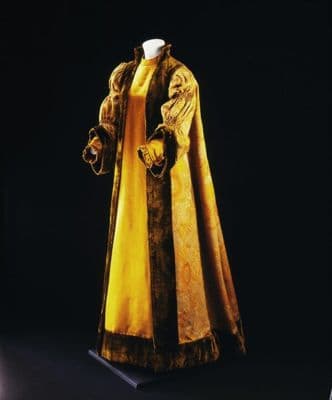
Both caftans drink from the same well of Orientalist fantasy, but fifty years apart they reveal how Western fashion's Eastern fever dream evolved. The 1920s Italian velvet version clings to Art Deco's geometric precision—those metallic patterns read like a textile translation of a Klimt painting, all angular luxury and Byzantine weight.
Influences·Middle Eastern caftanTechnique·drapingMotif·abstract-organic
Pull the Thread→
Follow this garment wherever the graph leads