FASHIONPEDIA
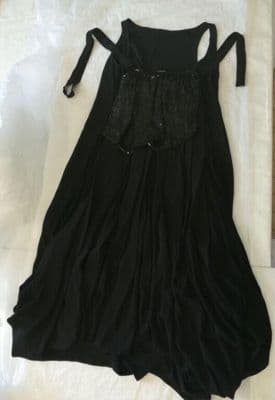
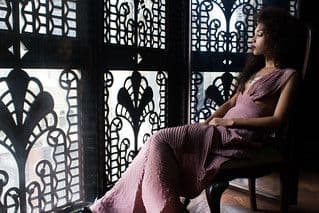
Dusty Rose Silk Blend Floor Length Nightgown
2020s · 2020s · Western
Production
ready-to-wear
Material
silk blend
Culture
Western
Movement
Minimalism · Quiet Luxury
Influences
1930s bias-cut slip dress
A floor-length nightgown in dusty rose silk blend that flows in gentle, unstructured drapes from the body. The garment features a simple slip-style silhouette with thin straps and appears to have a bias cut that allows the fabric to fall naturally without additional shaping. The silk blend creates a fluid, weightless appearance with subtle sheen. The minimalist construction reflects contemporary luxury sleepwear design, emphasizing comfort and natural movement over structured tailoring. The garment reaches the floor in soft folds, creating an elegant yet relaxed silhouette typical of high-end loungewear.
dresssymmetricalfloor
Connected To
Technique·draping
LINEAGE90 years · cross-culture→ directed
Lineage: “1930s bias-cut slip dress”
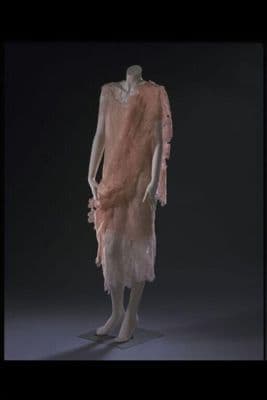
That pale gray 1930s dress and the dusty rose nightgown are separated by nine decades but united by the same gravitational pull—bias-cut silk that clings and releases in all the right places. The Depression-era day dress, with its modest neckline and careful draping, established the template for how fabric cut on the diagonal could make a woman's body look like liquid architecture.
Echoes Across Time
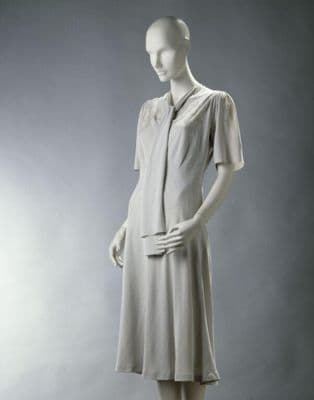
Great Depression → 2020s · 90yr48%
LINEAGE
That pale gray 1930s dress and the dusty rose nightgown are separated by nine decades but united by the same gravitational pull—bias-cut silk that clings and releases in all the right places. The Depression-era day dress, with its modest neckline and careful draping, established the template for how fabric cut on the diagonal could make a woman's body look like liquid architecture.
Technique·draping
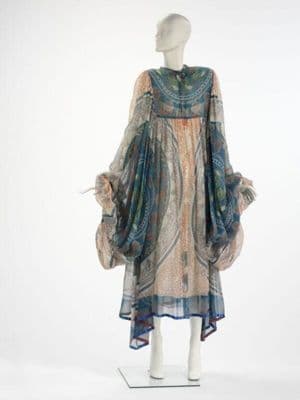
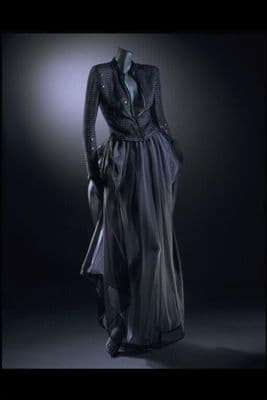
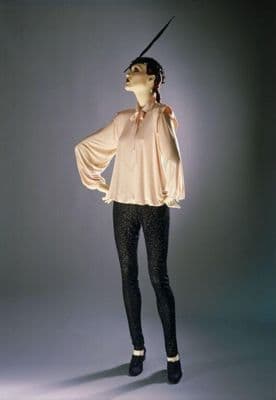
2020s → 1970s · 60yr40%
Pull the Thread→
Follow this garment wherever the graph leads