Great Depression · 1930s · French
Designer
Madeleine Vionnet
Production
haute couture
Material
silk crêpe
Culture
French
Influences
bias-cutting technique · Grecian draping
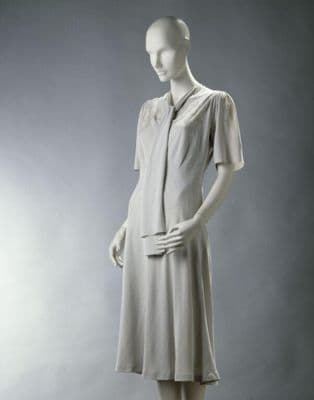
This mid-1930s day dress exemplifies Madeleine Vionnet's revolutionary bias-cutting technique, creating a fluid silhouette that follows the body's natural curves without structural corseting. The pale gray silk crêpe falls in soft, diagonal folds from a fitted bodice with short sleeves that have subtle gathering at the shoulders. The dress features a modest V-neckline and extends to mid-calf length with a gentle flare. The bias construction allows the fabric to drape naturally, creating vertical lines that elongate the figure. The accompanying silk crêpe de Chine petticoat provides proper understructure while maintaining the dress's fluid movement, representing the sophisticated simplicity that defined Depression-era fashion's move toward practical elegance.
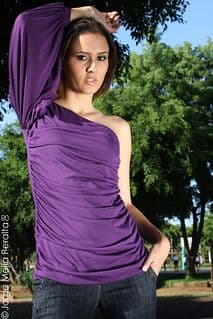
That purple jersey top's theatrical one-shoulder drape and the 1930s silk dress's fluid bias cut are separated by eight decades but united by the same gravitational pull toward ancient Greece. Both garments let fabric do the talking through strategic draping — the contemporary piece gathering and twisting jersey into sculptural folds, while the Depression-era dress achieves its liquid elegance through Madeleine Vionnet's bias-cutting genius that makes silk move like water.


That purple jersey top's theatrical one-shoulder drape and the 1930s silk dress's fluid bias cut are separated by eight decades but united by the same gravitational pull toward ancient Greece. Both garments let fabric do the talking through strategic draping — the contemporary piece gathering and twisting jersey into sculptural folds, while the Depression-era dress achieves its liquid elegance through Madeleine Vionnet's bias-cutting genius that makes silk move like water.

Follow this garment wherever the graph leads

These two dresses speak the same ancient language across eight decades, both channeling Greek chitons through their fluid, gathered fabrics that fall in soft vertical pleats from high waistlines. The 1930s bias-cut silk crêpe dress achieves its classical drape through Madeleine Vionnet's revolutionary cutting technique, while the 1990s chiffon piece uses sheer gathering and a contrasting belt to create similar columnar elegance.
That hot pink chiffon top with its crystalline brooch and asymmetrical drape carries the ghost of 1930s bias-cut elegance, even as it breaks every rule of Depression-era propriety. Both garments understand that silk wants to move—the gray crêpe dress pools and flows with Vionnet-inspired geometry, while the pink top catches light and air with equal fluidity, just cropped to show skin that would have scandalized the earlier era.
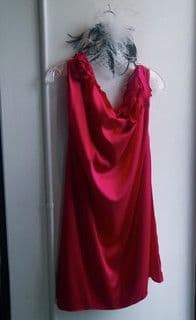
These two dresses are separated by nine decades but united by the ancient Greek chiton's enduring spell on fashion—both let fabric do the talking through pure drape rather than structured seaming. The 1930s dress channels Madeleine Vionnet's bias-cut revolution, where silk crêpe flows like liquid around the body's curves, while the red jersey piece updates that classical vocabulary with a more aggressive cowl that pools dramatically at the neckline.

These two dresses speak the same ancient language across eight decades, both channeling Greek chitons through their fluid, gathered fabrics that fall in soft vertical pleats from high waistlines. The 1930s bias-cut silk crêpe dress achieves its classical drape through Madeleine Vionnet's revolutionary cutting technique, while the 1990s chiffon piece uses sheer gathering and a contrasting belt to create similar columnar elegance.