V&A
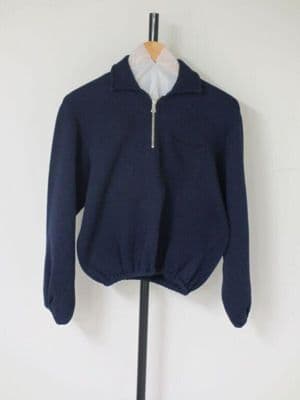
Navy Blue Cotton Knit Track Jacket
1950s · 1960s · British
Production
ready-to-wear
Material
cotton knit
Culture
British
Movement
Atomic Age
Influences
American collegiate athletic wear
A navy blue cotton knit track jacket with a relaxed blouson silhouette characteristic of early athletic wear. The garment features a half-zip front closure with white zipper tape, creating a contrasting detail against the dark fabric. The jacket has a ribbed collar that appears to be a mock turtleneck style, and elastic ribbed cuffs at the wrists. The body shows a gathered elastic waistband typical of track jackets, creating the blouson effect. A chest pocket is visible on the left side. The cotton knit construction appears substantial but flexible, designed for athletic movement while maintaining warmth. This represents the emerging casual sportswear aesthetic of the late 1950s-early 1960s when athletic clothing began transitioning from purely functional to lifestyle wear.
jacketregular fitcollarlesship length
Connected To
Movement·Atomic AgeWorn with·track pantsFunction·sportswear

Pull the Thread→
Follow this garment wherever the graph leads