THE MET
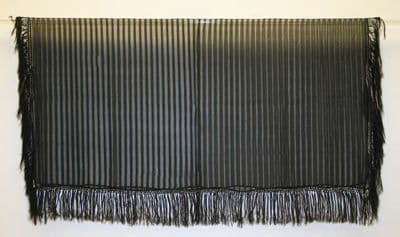
Black Gold Striped Silk Shawl
Victorian Early / Crinoline · 1840s · French
Production
handmade
Material
silk
Culture
French
Influences
Kashmir shawl tradition
A rectangular silk shawl featuring fine vertical stripes in alternating black and gold or cream tones. The textile displays a lustrous surface characteristic of high-quality silk weaving, with the stripes running the full length of the piece. The shawl is finished with substantial twisted silk fringe along the shorter edges, creating decorative borders that would have enhanced movement when worn. The striping pattern appears to be woven rather than printed, suggesting sophisticated textile production. This type of formal shawl was essential to Victorian women's evening dress, worn draped over the shoulders or arms to complement the wide skirts of the crinoline period.
scarf
Connected To
Influences·Kashmir shawl traditionTechnique·hand-weaving
SHARED10 years · cross-culture
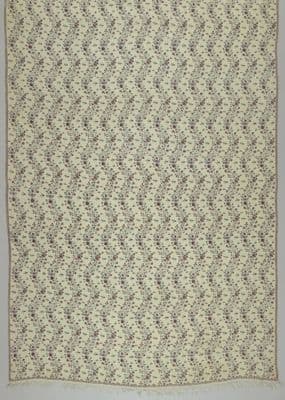
These shawls trace the Victorian obsession with Kashmir weaving through two distinct cultural translations. The cream wool paisley follows the traditional Indian boteh motifs that made Kashmir shawls the ultimate status symbol, while the black silk version strips away the ornamental language for pure geometric impact—those razor-sharp metallic stripes and silk fringe suggesting French manufacturers had learned to distill the luxury without the exoticism.
Text80%
Image63%
Entity34%
Worn with·corsetWorn with·evening gownFunction·court-formal
SHARED40 years · cross-culture · cross-category
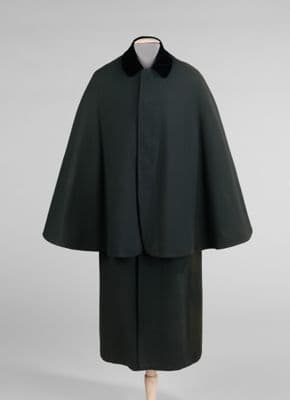
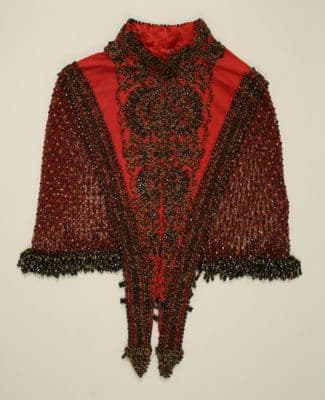
These two pieces reveal how Victorian formality evolved from restrained elegance to theatrical excess. The earlier French shawl speaks in whispers—its disciplined pinstripes and minimal fringe suggesting the kind of geometric sobriety that marked mid-century taste, while the later American cape shouts with every bead, its crimson silk ground nearly obliterated by cascades of glittering embellishment that transform the wearer into a walking jewel box.
Influences·Kashmir shawl tradition
SHARED20 years · cross-culture
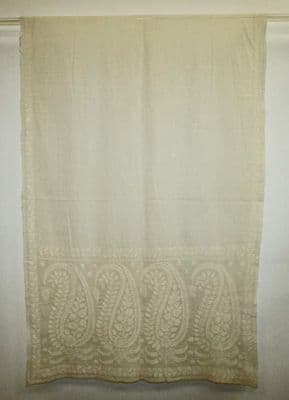
These two scarves reveal how the Kashmir shawl craze swept through both sides of the Atlantic in the mid-19th century, though each culture interpreted the template differently. The French silk version maintains the traditional rectangular format but strips away ornament for pure geometric sophistication—those crisp black and gold stripes with knotted fringe speak to Second Empire restraint.
Text
Worn with·evening gownFunction·court-formal
SHARED40 years · cross-culture · cross-category
Text65%
Echoes Across Time
Victorian Late / Bustle → Victorian Early / Crinoline · 40yr59%
SHARED
These two pieces reveal how Victorian formality evolved from restrained elegance to theatrical excess. The earlier French shawl speaks in whispers—its disciplined pinstripes and minimal fringe suggesting the kind of geometric sobriety that marked mid-century taste, while the later American cape shouts with every bead, its crimson silk ground nearly obliterated by cascades of glittering embellishment that transform the wearer into a walking jewel box.
Worn with·corsetWorn with·evening gownFunction·court-formal
Pull the Thread→
Follow this garment wherever the graph leads