Victorian Late / Bustle · 1860s-1880s · American
Production
handmade
Material
silk with glass beading
Culture
American
Influences
Turkish dolman sleeve · Middle Eastern beadwork traditions
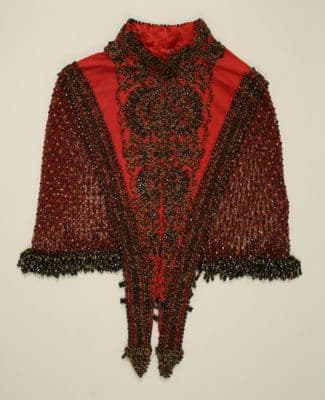
A luxurious short evening cape featuring rich red silk as the base fabric, entirely covered with intricate glass beadwork in geometric and floral patterns. The cape has a high standing collar and fitted shoulder construction that transitions to a flowing silhouette ending at approximately hip length. The beadwork creates elaborate scrolling motifs across the front panels and decorative borders along the edges. The sleeves are three-quarter length with heavily beaded cuffs featuring fringe trim. Long beaded tassels hang from the front closure, adding movement and ornamental detail. The dense beadwork would have created substantial weight and shimmer under gaslight, typical of wealthy Victorian evening wear.
Follow this garment wherever the graph leads
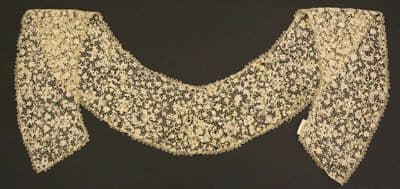
These two Victorian confections reveal how the era's obsession with feminine armor played out across class lines and continents. The American cape drowns its wearer in cascading glass beads that catch light like chainmail, while the Italian bertha collar creates its own kind of protective shell through intricate lacework that transforms the décolletage into a fortress of propriety.
These pieces speak the same language of evening grandeur, separated by seven decades but united in their devotion to meticulous beadwork as the ultimate mark of luxury.
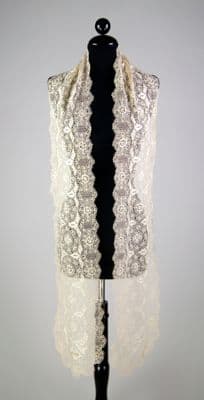
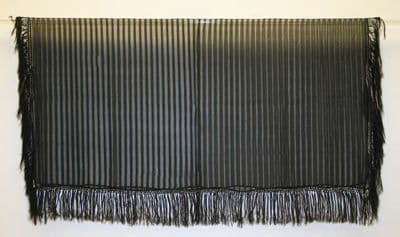
These two pieces reveal how Victorian formality evolved from restrained elegance to theatrical excess. The earlier French shawl speaks in whispers—its disciplined pinstripes and minimal fringe suggesting the kind of geometric sobriety that marked mid-century taste, while the later American cape shouts with every bead, its crimson silk ground nearly obliterated by cascades of glittering embellishment that transform the wearer into a walking jewel box.

These two pieces reveal how Victorian formality evolved from restrained elegance to theatrical excess. The earlier French shawl speaks in whispers—its disciplined pinstripes and minimal fringe suggesting the kind of geometric sobriety that marked mid-century taste, while the later American cape shouts with every bead, its crimson silk ground nearly obliterated by cascades of glittering embellishment that transform the wearer into a walking jewel box.