V&A
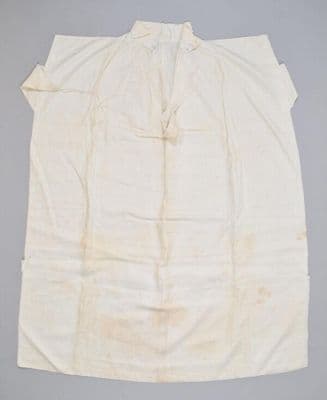
Cream Linen Men's Shirt with Missing Sleeves
Rococo · 1750s · English
Production
handmade
Material
linen
Culture
English
This mid-18th century English men's shirt displays the characteristic construction of the Rococo period with its loose, gathered body and high standing collar. Made from cream-colored linen, the shirt features a front opening with what appears to be drawstring closure at the neck. The body is cut generously wide with gathered fullness at the shoulders where sleeves would have attached. The shirt shows typical period construction with side seams and a curved hemline that would have been tucked into breeches. The high collar band reflects the formal neckwear requirements of the era, designed to support a stock or cravat. This represents standard masculine undergarment construction of the Georgian period.
shirt/blouseloose fitcollarlesship length
Connected To
Worn with·breechesWorn with·waistcoat
SHARED50 years · cross-culture · cross-category
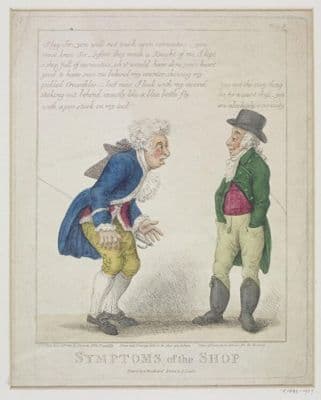
The hunched figure in the blue tailcoat embodies the Romantic era's rebellion against the rigid formality that once demanded pristine linen shirts like the cream specimen below — shirts so precious they were built in detachable pieces, sleeves pinned on fresh each morning by valets who understood that a gentleman's reputation lived in his spotless cuffs.
58%
Worn with·breechesWorn with·waistcoat
SHARED240 years · cross-culture · cross-category
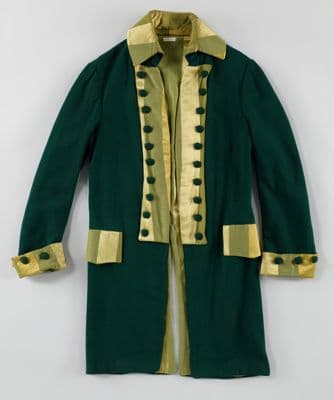
This cream linen shirt, stripped down to its essential torso with those tellingly absent sleeves, and the forest green military frock coat with its regimental swagger represent two sides of 18th-century masculine dress codes.
58%
Worn with·breechesWorn with·waistcoat
SHARED60 years · cross-culture · cross-category
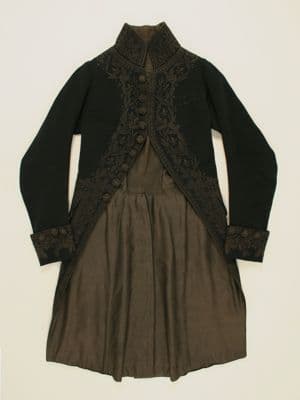
The dark green tailcoat's sharp cutaway front and that cream linen shirt's billowing body speak to the same theatrical masculinity, just staged sixty years apart. Where the shirt creates drama through sheer volume—those gathered shoulders designed to balloon beyond a waistcoat's confines—the later coat achieves it through architectural precision, that embroidered chest panel drawing the eye down to the coat's knife-edge where it splits over the hips.
Worn with·stock
SHARED10 years · cross-culture · cross-category
Text68%
Image60%
Pull the Thread→
Follow this garment wherever the graph leads