SMITHSONIAN
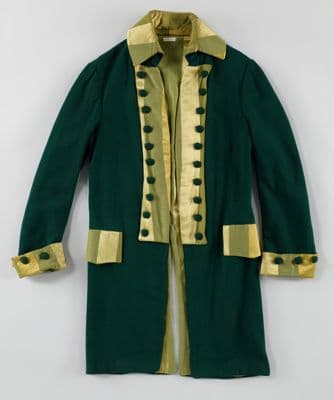
Forest Green Wool Military Frock Coat with Cream Trim
Neoclassical Transition · 1990s · European
Production
handmade
Material
wool
Culture
European
Influences
1790s military uniform · Revolutionary War officer's coat
This is a theatrical reproduction of a late 18th-century military-style frock coat featuring a deep forest green wool body with contrasting cream-colored facings and collar. The coat displays characteristic Revolutionary-era details including double-breasted front closure with two vertical rows of black buttons, high standing collar, and fitted sleeves with decorative button trim at the cuffs. The coat extends to mid-thigh length with a flared skirt typical of the period. The cream-colored waistcoat underneath shows similar button detailing. The construction mimics period tailoring techniques with structured shoulders and fitted waist, though likely executed with modern materials and methods for stage durability.
coatfit and flareknee length
Connected To
58%
Worn with·breechesWorn with·waistcoat
SHARED180 years · cross-culture
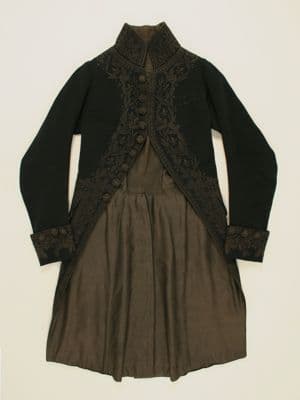
These two coats speak the same military language across nearly two centuries, both wielding that particular shade of forest green that signals authority without ostentation. The earlier coat's lavish silk embroidery cascades down the front in baroque flourishes, while its descendant strips away the ornament for clean lines of cream piping and a double row of buttons that march up the chest like soldiers.
Pull the Thread→
Follow this garment wherever the graph leads