SMITHSONIAN
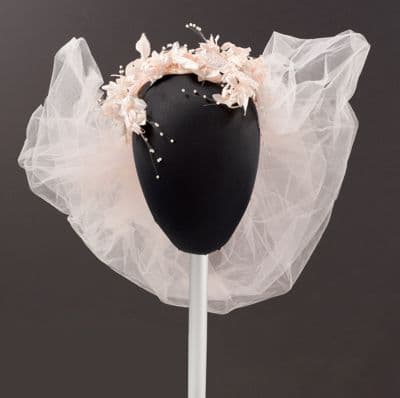
Pink Floral Headband with Tulle Veil
1950s · 1960s · American
Production
handmade
Material
synthetic tulle
Culture
American
Movement
New Look / Post-War
Influences
1960s mod circular silhouettes
A delicate bridal headpiece featuring a curved headband adorned with small pale pink fabric flowers and scattered pearl-like beads. The headband supports a dramatic circular tulle veil that creates a soft, cloud-like silhouette around the wearer's head and shoulders. The synthetic tulle appears lightweight and translucent, with a subtle sheen that catches light. The floral decorations are clustered asymmetrically along the headband, creating visual interest while maintaining the piece's ethereal quality. This style reflects 1960s bridal fashion's embrace of both traditional elements and modern synthetic materials.
headband/head covering/hair accessory
Connected To
Worn with·wedding dressFunction·wedding
SHARED90 years · cross-culture
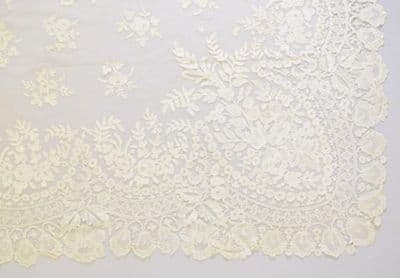
The Victorian lace veil's intricate snowflake motifs, worked in bobbin lace with the precision of a master craftsman, finds its descendant in the 1950s headband's scatter of pearl droplets across machine-made tulle—both using repetitive white-on-white patterning to create bridal luminosity.
Text68%
Image72%
Entity29%
Worn with·wedding dressFunction·wedding
SHARED90 years · cross-culture · cross-category
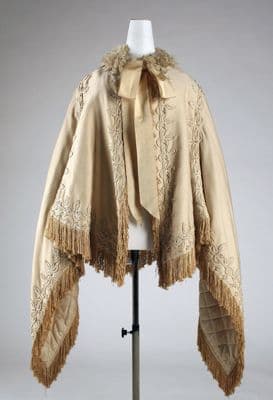
These two bridal accessories reveal how wedding traditions compress time—the Victorian cape's heavy silk fringe and the 1950s headband's gossamer tulle both frame the bride's face with deliberate softness, creating that essential bridal halo effect. The cape achieves it through weight and luxury, cascading embroidered fringe that catches light like expensive jewelry, while the headband does it through pure transparency, those billowing tulle clouds that seem to float around pink silk flowers.
Worn with·wedding dressFunction·wedding
SHARED70 years · cross-culture
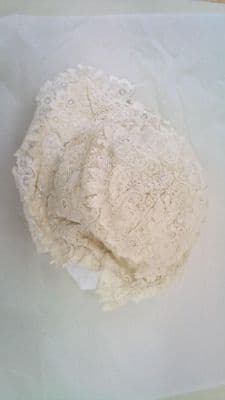
Both pieces choreograph the same bridal theater: flowers nestled in clouds of white netting that frame the face like a soft-focus lens. The Belgian lace cap transforms needle and thread into botanical poetry, its point de gaze blossoms so fine they seem to breathe, while the 1950s American headband takes a more literal approach—actual silk flowers anchored to synthetic tulle that billows with postwar optimism.
Worn with·wedding dressFunction·wedding
SHARED30 years · cross-culture
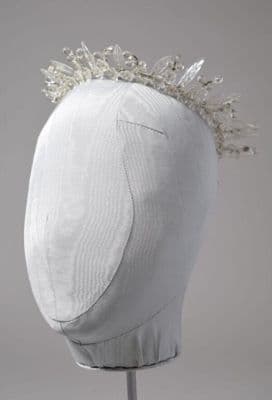
These two bridal headpieces reveal how wedding traditions bend to economic realities while clinging to their essential romance. The Depression-era French piece transforms necessity into poetry—those molded glass flowers catch light like real petals might have before budgets tightened, while the later American version shows postwar abundance returning, with its cascade of synthetic tulle billowing like a small cloud and delicate fabric flowers clustered in optimistic pink.
Pull the Thread→
Follow this garment wherever the graph leads