Victorian Late / Bustle · 1870s · French
Production
handmade
Material
wool and silk
Culture
French
Influences
Victorian decorative arts · Second Empire luxury
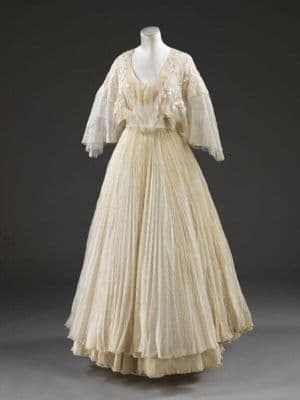
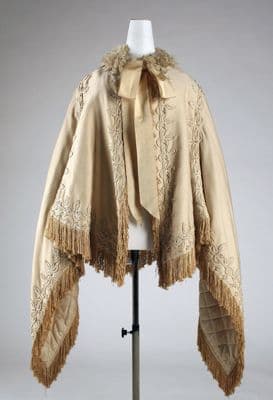
A ceremonial cape featuring elaborate silk embroidery and extensive fringe trim throughout. The garment displays intricate floral and scrollwork embroidery in golden tones against a cream wool base. Heavy silk fringe borders the entire perimeter, creating dramatic movement and texture. The cape fastens at the neck with ribbon ties and drapes loosely over the shoulders without structured shaping. The embroidered motifs follow curvilinear patterns typical of Victorian decorative arts, with dense coverage across the fabric surface. The fringe appears to be silk and varies in length, creating layered textural effects. This represents the Victorian preference for ornate surface decoration and luxurious materials in ceremonial garments.
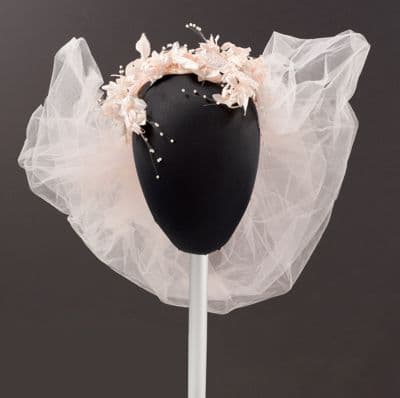
These two bridal accessories reveal how wedding traditions compress time—the Victorian cape's heavy silk fringe and the 1950s headband's gossamer tulle both frame the bride's face with deliberate softness, creating that essential bridal halo effect. The cape achieves it through weight and luxury, cascading embroidered fringe that catches light like expensive jewelry, while the headband does it through pure transparency, those billowing tulle clouds that seem to float around pink silk flowers.


These two bridal accessories reveal how wedding traditions compress time—the Victorian cape's heavy silk fringe and the 1950s headband's gossamer tulle both frame the bride's face with deliberate softness, creating that essential bridal halo effect. The cape achieves it through weight and luxury, cascading embroidered fringe that catches light like expensive jewelry, while the headband does it through pure transparency, those billowing tulle clouds that seem to float around pink silk flowers.

Follow this garment wherever the graph leads
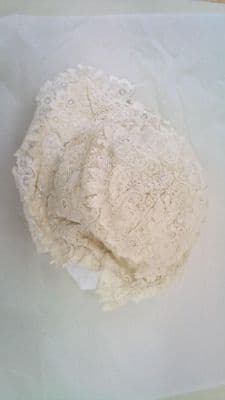
Both pieces transform the bride into something almost ethereal through the sheer accumulation of handwork—the cape's dense embroidered scrollwork and cascading fringe echoes the cap's impossibly delicate needle lace, each stitch a small prayer for prosperity.
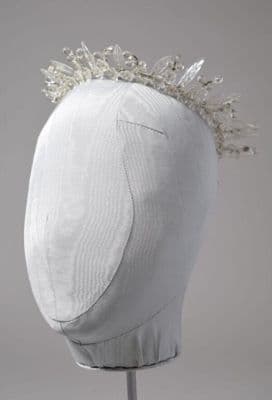
These pieces capture French bridal tradition's shift from romantic abundance to stark necessity. The Victorian cape drowns the bride in cream wool luxury—cascading fringe, elaborate embroidery, and enough fabric to announce prosperity from across a cathedral—while the Depression-era headpiece distills wedding ceremony to its barest symbolic essence: molded glass spikes that catch light like ice crystals, fragile and sharp as the economic moment that birthed it.
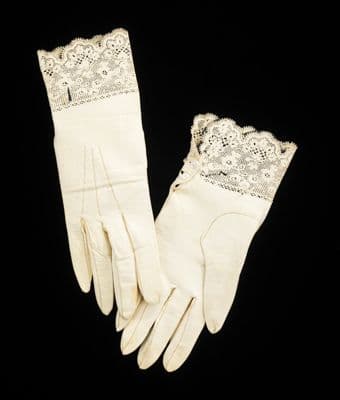
These two pieces reveal how Victorian brides constructed their wedding day mystique through layers of precious detail, each garment a small theater of craftsmanship. The cape's heavy silk fringe and embroidered flourishes echo the gloves' delicate lace cuffs—both deploy texture as a form of bridal armor, transforming functional accessories into talismanic objects.

These pieces capture French bridal tradition's shift from romantic abundance to stark necessity. The Victorian cape drowns the bride in cream wool luxury—cascading fringe, elaborate embroidery, and enough fabric to announce prosperity from across a cathedral—while the Depression-era headpiece distills wedding ceremony to its barest symbolic essence: molded glass spikes that catch light like ice crystals, fragile and sharp as the economic moment that birthed it.