1990s · 1990s · American
Production
ready-to-wear
Material
silk taffeta
Culture
American
Movement
Supermodel Era
Influences
Victorian puffed sleeves · 1980s power shoulder
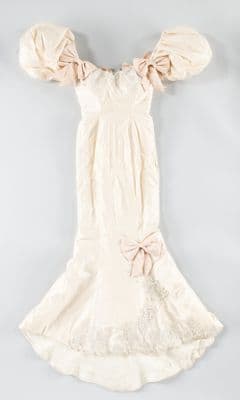
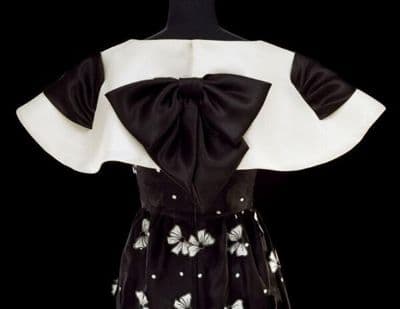
This ivory silk taffeta wedding gown features dramatically puffed off-shoulder sleeves gathered with large fabric bows at each shoulder point. The fitted bodice transitions to a full skirt with a mermaid-style silhouette that flares at the hem. Sequined floral embellishments are scattered across the lower portion of the skirt, creating textural interest against the smooth taffeta surface. A large fabric bow adorns the hip area, echoing the shoulder treatment. The detachable train extends the silhouette with additional sequined floral motifs. The construction demonstrates 1990s bridal fashion's embrace of romantic volume and ornate surface decoration, typical of the era's maximalist approach to formal wear.


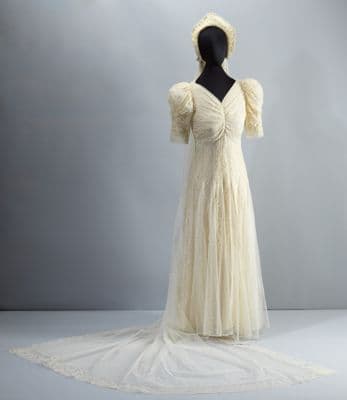
These two wedding gowns reveal how the fantasy of bridal femininity shape-shifts across decades while clinging to the same theatrical impulses. The 1920s dress whispers its drama through delicate lace appliqués and those sweetly puffed sleeves that nod to Victorian romance, while the 1990s gown shouts it through aggressive architectural shoulders and a mermaid silhouette that transforms the bride into a living exclamation point.
Follow this garment wherever the graph leads
These two wedding gowns reveal how the fantasy of bridal femininity shape-shifts across decades while clinging to the same theatrical impulses. The 1920s dress whispers its drama through delicate lace appliqués and those sweetly puffed sleeves that nod to Victorian romance, while the 1990s gown shouts it through aggressive architectural shoulders and a mermaid silhouette that transforms the bride into a living exclamation point.
Both dresses speak the same language of theatrical femininity through their obsession with bows—the 1980s evening gown deploys them as architectural punctuation marks across shoulders and waist, while the 1990s wedding dress uses them as romantic flourishes on sleeves and bustle. What connects them across that decade is their shared belief that a bow isn't just decoration but a declaration: here stands a woman who refuses to apologize for taking up space.
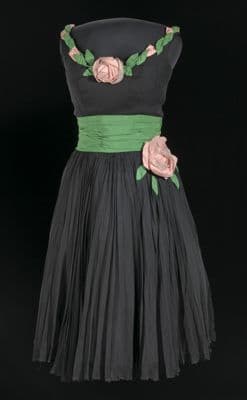
Both dresses speak the language of strategic volume, but they deploy it with completely different accents. The 1950s cocktail dress uses its knife-pleated skirt and sculptural rose details as punctuation marks—dramatic but contained, like a perfectly timed aside. The 1990s wedding gown takes that same impulse toward theatrical silhouette and amplifies it into a full aria: those balloon sleeves and mermaid train aren't whispering sophistication, they're announcing it from the altar.
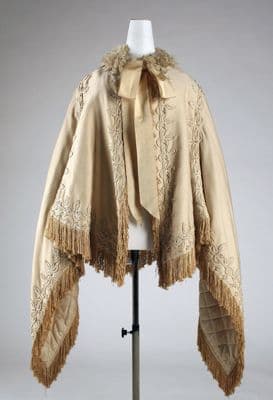
The Victorian cape's elaborate fringe and the '90s gown's cascading bow share an unapologetic commitment to bridal excess—both pile on decorative elements where restraint might whisper, they shout. What separates them by 120 years is approach: the cape achieves its drama through craft (that intricate embroidered fringe took someone weeks), while the gown banks on pure architectural volume, using silk taffeta's natural body to create those cartoonish puffed sleeves and mermaid silhouette.


The Victorian cape's elaborate fringe and the '90s gown's cascading bow share an unapologetic commitment to bridal excess—both pile on decorative elements where restraint might whisper, they shout. What separates them by 120 years is approach: the cape achieves its drama through craft (that intricate embroidered fringe took someone weeks), while the gown banks on pure architectural volume, using silk taffeta's natural body to create those cartoonish puffed sleeves and mermaid silhouette.