THE MET
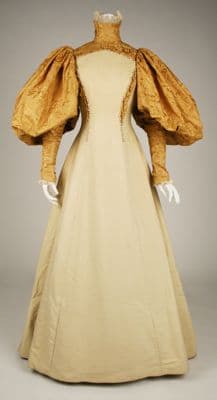
Golden Yellow Silk Taffeta Bridesmaid Dress
Fin de Siecle / Gibson Girl · 1890s · American
Production
handmade
Material
silk taffeta
Culture
American
Influences
1890s leg-of-mutton sleeve · Gibson Girl silhouette
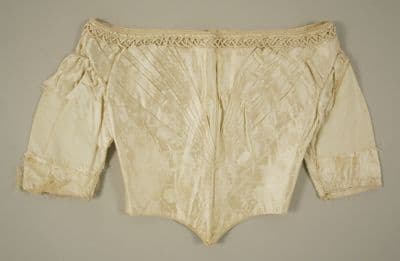
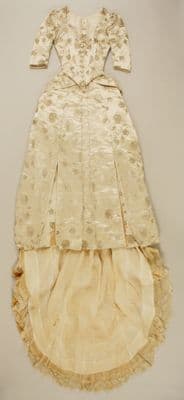
This 1896 bridesmaid dress exemplifies the dramatic silhouette of the Gibson Girl era with its enormous leg-of-mutton sleeves that balloon from fitted cuffs to maximum width at the shoulders. The golden yellow silk taffeta bodice features a high neckline and fitted construction that emphasizes the wasp waist typical of the period. The sleeves are constructed with internal support to maintain their exaggerated spherical shape. The cream-colored skirt falls in a smooth A-line from the natural waistline to floor length, creating the characteristic bell silhouette. The contrast between the rich golden taffeta of the sleeves and bodice against the lighter skirt demonstrates the period's love of textile variety within a single garment.
dressfit and flarehigh neckfloor length
Connected To
Influences·1890s leg-of-mutton sleeveWorn with·petticoat
SHARED40 years
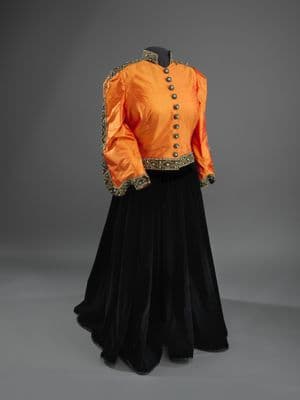
These two dresses trace the stubborn afterlife of the 1890s leg-of-mutton sleeve, that balloon of fabric that refused to die quietly. The golden Gibson Girl gown shows the sleeve at its most extravagant—those puffed shoulders could shelter a small child—while the Depression-era orange ensemble offers a scaled-down homage, the sleeves still dramatically gathered but tamed to fit through a doorway.
Pull the Thread→
Follow this garment wherever the graph leads