1980s · 1980s · French
Designer
Philippe Venet
Production
haute couture
Material
silk organza and satin
Culture
French
Movement
Power Dressing
Influences
1950s New Look silhouette · Victorian formal dress proportions
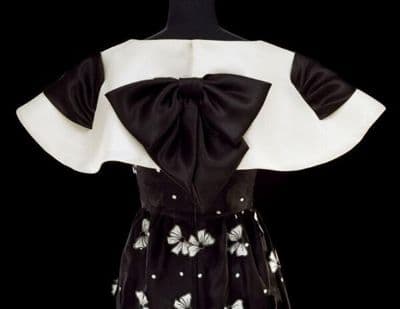
This evening dress features a dramatic black and white color scheme with a fitted bodice and full skirt silhouette characteristic of late 1980s formal wear. The bodice displays contrasting white panels with black trim and sleeves, creating a structured, architectural appearance. A large black satin bow dominates the back, positioned at the waist as both decorative element and structural detail. The skirt appears to be black silk with white floral motifs scattered across the surface, creating visual interest against the dark ground. The construction demonstrates couture-level tailoring with precise seaming and structured support typical of Philippe Venet's work during this period.


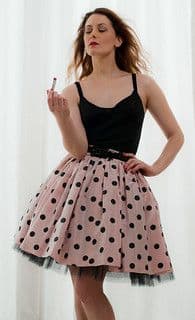
Both garments reach back to Dior's 1947 New Look, but they grab different pieces of that DNA. The pink polka-dot skirt takes the full circle silhouette and runs it through a rockabilly filter—all tulle bounce and retro sweetness that screams weekend dress-up.


Follow this garment wherever the graph leads
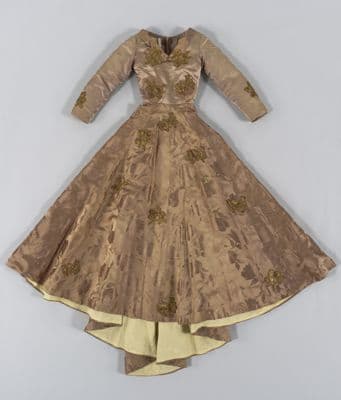
The 1950s gown's golden damask and fitted bodice extending into a full circle skirt speaks the same formal language as the 1980s dress's dramatic black bow and voluminous white sleeves, but where the earlier piece whispers elegance through its lustrous brocade and controlled silhouette, the later dress shouts it through stark contrast and theatrical proportions.
Both garments reach back to Dior's 1947 New Look, but they grab different pieces of that DNA. The pink polka-dot skirt takes the full circle silhouette and runs it through a rockabilly filter—all tulle bounce and retro sweetness that screams weekend dress-up.
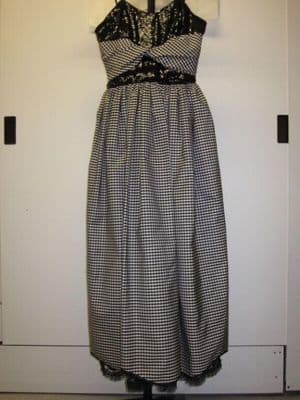
These two gowns speak the same visual language of theatrical contrast, where black bows become the punctuation marks that transform sweet into sophisticated. The earlier French dress deploys its oversized satin bow like a couture exclamation point against crisp white organza, while the American gingham piece a decade later echoes that same bow-as-focal-point strategy, though now rendered in matching fabric that feels more integrated than imposed.
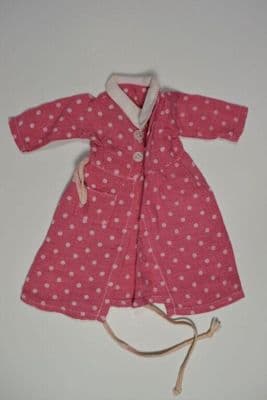
That theatrical black satin bow sprawling across the back of the 1980s evening dress is pure Lacroix-era excess—a grown-up's interpretation of the sweet ties that cinch the pink polka-dot doll dress from three decades earlier. Both garments worship at the altar of Christian Dior's New Look, but where the 1950s piece whispers its femininity through demure wrap styling and cheerful dots, the later dress shouts it with operatic flourishes and stark contrast.
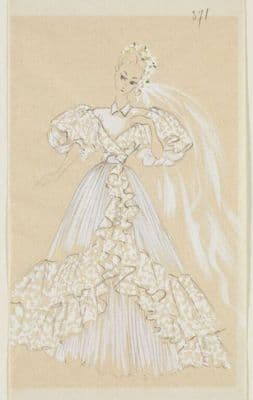
The black bow cascading down the back of that 1980s evening dress and the tumbling lace flounces on the wartime wedding gown both understand that drama lives in the details that trail behind you. One uses stark graphic contrast—that theatrical bow against crisp white organza—while the other builds its romance through layers of delicate lace that seem to spill like cream down the skirt.