Empire / Regency · 1800s · African American
Production
handmade
Material
cotton
Culture
African American
Influences
European cut-work embroidery traditions
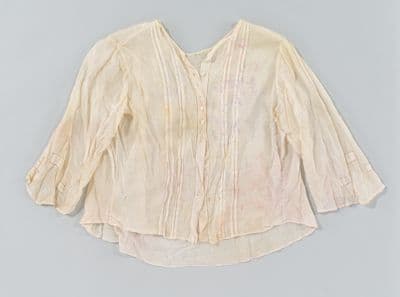
A loose-fitting cotton blouse with three-quarter length sleeves that gather into wide cuffs. The garment features vertical bands of cut-work and drawn-thread embroidery running down the front, creating decorative openwork panels. The neckline appears to be a simple rounded or V-shape. The sleeves are full and gathered, typical of early 19th century construction. The cotton fabric appears to be a plain weave, and the overall silhouette is relaxed and practical. The cut-work embroidery technique involves cutting threads from the fabric and then decoratively reinforcing the remaining threads, creating a lace-like effect that was both functional for ventilation and decorative.
Follow this garment wherever the graph leads
These two garments reveal how embroidered ornamentation traveled across class lines and continents in the late 18th and early 19th centuries.
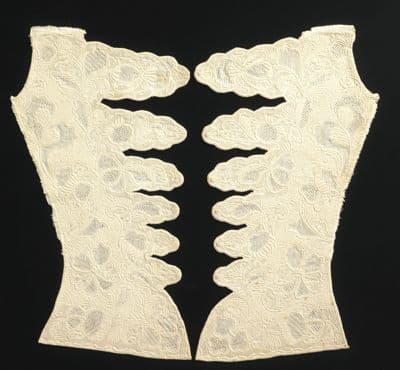
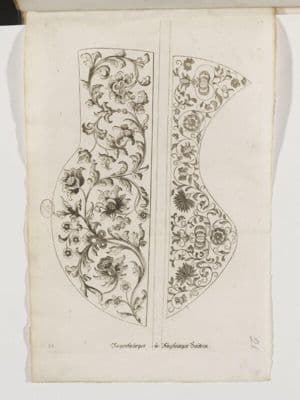
These two garments reveal how the aristocratic European obsession with whitework embroidery traveled across an ocean and a century to become a marker of respectability in African American communities. The baroque bodice fronts, with their dense floral scrollwork meant to peek through an open gown, share DNA with the later cotton blouse's precise cutwork and pin-tucking—both demanding the same painstaking needlework that announced leisure time and refined taste.
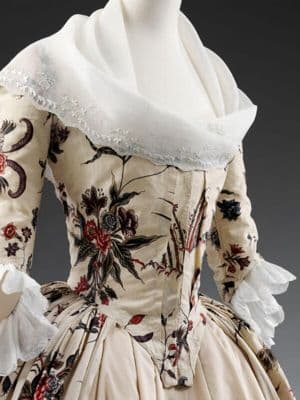
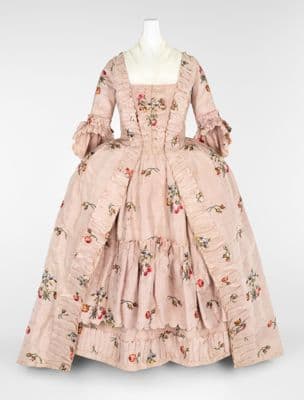
These two garments share an obsession with delicate surface decoration, but reveal how embellishment travels between worlds. The 18th-century robe's scattered floral sprigs—those tiny painted roses dotting the pink silk like confetti—find their echo in the cotton blouse's precise cutwork embroidery, where negative space becomes ornament through painstaking needlework.
The delicate floral embroidery scattered across the first gown's ivory silk echoes in the precise cutwork patterns threading through the second garment's cotton weave — both pieces wielding needlework as a form of quiet luxury, though separated by decades and continents.

These two garments reveal how the aristocratic European obsession with whitework embroidery traveled across an ocean and a century to become a marker of respectability in African American communities. The baroque bodice fronts, with their dense floral scrollwork meant to peek through an open gown, share DNA with the later cotton blouse's precise cutwork and pin-tucking—both demanding the same painstaking needlework that announced leisure time and refined taste.