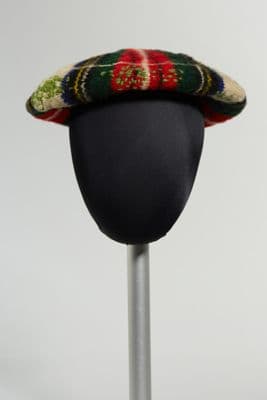
2020s · 2020s · Western
Production
ready-to-wear
Material
wool blend
Culture
Western
Movement
Quiet Luxury
Influences
Scottish tartan tradition
A relaxed-fit blazer in navy blue wool blend featuring a classic tartan plaid pattern with red and white accent lines. The jacket displays traditional menswear tailoring with notched lapels and a single-breasted front closure. The plaid pattern appears to be a medium-scale check with evenly spaced grid lines creating rectangular compartments. The garment is worn open over dark clothing, suggesting contemporary casual styling rather than formal business wear. The construction appears machine-made with clean finishing typical of ready-to-wear menswear. The overall silhouette is comfortable and unstructured, reflecting modern preferences for relaxed professional attire.
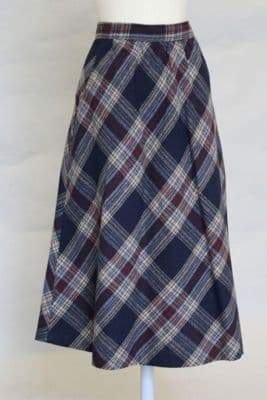
The same navy-burgundy-white tartan that wraps around this man's blazer reappears decades later in the A-line skirt's bias-cut panels, proving that certain plaid combinations have a gravitational pull that transcends both gender and time. What started as Highland clan signaling became American prep school uniform, then morphed into contemporary menswear's nostalgic nod to academic tradition—the skirt's 1980s silhouette catching the pattern at its most democratized moment.


The same navy-burgundy-white tartan that wraps around this man's blazer reappears decades later in the A-line skirt's bias-cut panels, proving that certain plaid combinations have a gravitational pull that transcends both gender and time. What started as Highland clan signaling became American prep school uniform, then morphed into contemporary menswear's nostalgic nod to academic tradition—the skirt's 1980s silhouette catching the pattern at its most democratized moment.

Follow this garment wherever the graph leads
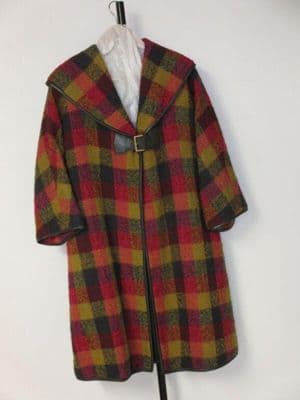
These two pieces trace the long journey of Scottish tartan from Highland clan identity to global fashion currency. The 1950s swing coat treats plaid as pure pattern—those bold burgundy and forest green checks scaled up into an all-American statement of post-war optimism, the oversized silhouette as confident as the era itself.
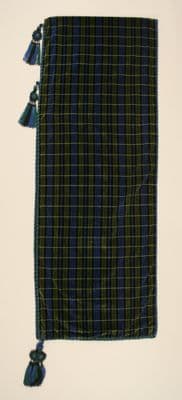
That Victorian silk plaid hood and today's tartan blazer are separated by 160 years but united by Scotland's most enduring export: the mesmerizing geometry of intersecting colored bands that transforms simple cloth into cultural code.
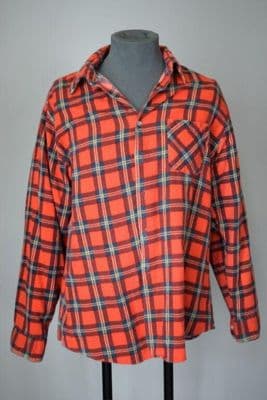
The actor's navy tartan blazer and that vintage flannel shirt are separated by decades and dress codes, but they're both descendants of Scottish Highland clan patterns that somehow became the universal language of "I'm approachable but still put-together." The blazer translates tartan into contemporary menswear formality—structured shoulders, proper lapels, the kind of thing you wear to a film premiere—while the flannel keeps the pattern's original democratic spirit, soft and unstructured like s.

These two pieces trace the long journey of Scottish tartan from Highland clan identity to global fashion currency. The 1950s swing coat treats plaid as pure pattern—those bold burgundy and forest green checks scaled up into an all-American statement of post-war optimism, the oversized silhouette as confident as the era itself.