SMITHSONIAN
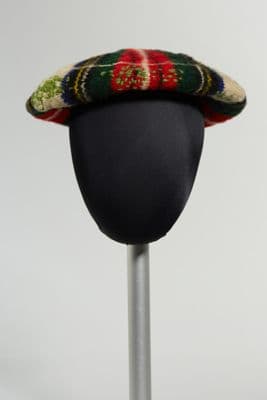
Black Red Green Tartan Wool Tam O'Shanter
Scottish Traditional · 1960s · Scottish
Production
handmade
Material
wool knit
Culture
Scottish
Influences
Scottish Highland dress · clan tartan tradition
A traditional Scottish tam o'shanter featuring a fitted black wool headband that supports a full, rounded crown. The crown displays a complex tartan pattern woven in red, green, and gold threads against a black ground, creating the distinctive plaid geometry associated with Scottish clan tartans. The hat maintains its structured shape through the knitted wool construction, with the crown designed to drape slightly when worn. A red pompom tops the center, completing the traditional Highland dress accessory. The precise geometric intersections of the tartan pattern demonstrate skilled textile work, with each colored thread carefully positioned to create the repeating plaid motif that identifies specific Scottish heritage.
hat
Connected To
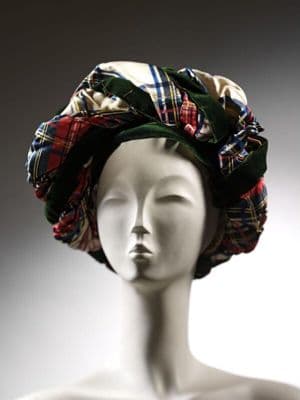
Influences·Scottish Highland dressTechnique·hand-weaving
SHARED140 years · cross-culture
These two pieces trace the curious journey of Scottish tartan from Highland necessity to Romantic fantasy. The 19th-century turban transforms clan plaid into orientalist theater—all that silk draped and twisted into something a Victorian lady might wear to a costume ball, the tartan's military crispness dissolved into decorative swags.
Text78%
Image85%
Entity43%
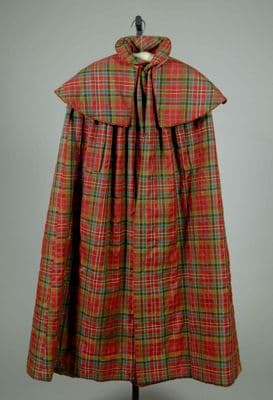
Influences·Scottish Highland dress
SHARED80 years · cross-culture · cross-category
The Victorian cape's bold red-green-yellow tartan and the Scottish tam's more muted plaid both spring from the 19th-century romanticization of Highland dress, but they tell opposite stories about cultural appropriation.
Text73%
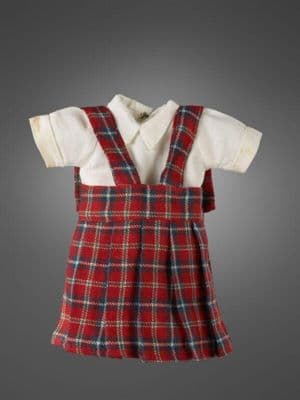
Influences·Scottish Highland dress
SHARED10 years · cross-culture · cross-category
This tam o'shanter and pinafore dress reveal how Scottish Highland dress infiltrated the most unlikely corners of mid-century fashion. The tam's authentic clan tartan—with its deep forest ground punctuated by crimson and gold—carries the weight of Highland tradition, while the French pinafore cheekily borrows the same red-navy-green palette and geometric precision, transforming warrior's cloth into a schoolgirl's uniform.
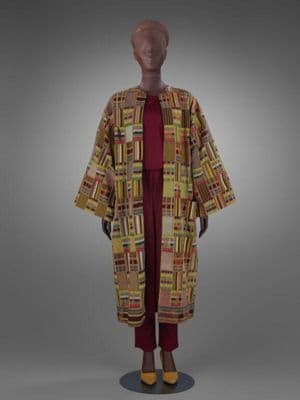
Technique·hand-weavingFunction·religious-ceremonial
SHARED50 years · cross-culture · cross-category
Text50%
Pull the Thread→
Follow this garment wherever the graph leads