THE MET
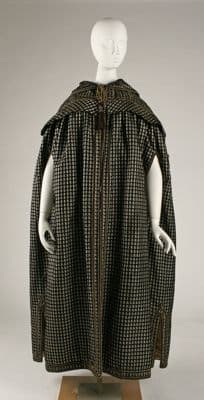
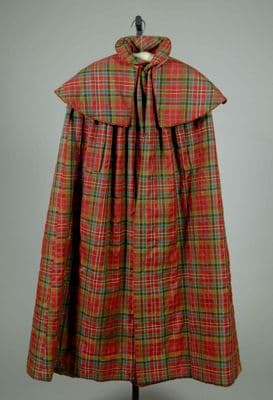
Red Green Yellow Tartan Wool Cape
Victorian Late / Bustle · 1860s-1880s · American
Production
handmade
Material
wool tartan
Culture
American
Influences
Scottish Highland dress · 1870s shoulder emphasis
A full-length wool cape in red, green, yellow and black tartan plaid featuring a distinctive double-layer construction. The garment has a fitted shoulder cape or tippet that drapes over a longer flowing body, creating visual weight at the shoulders typical of 1870s silhouettes. The cape fastens at the neck with ties and falls in generous folds to approximately ankle length. The tartan pattern shows a complex grid of intersecting colored stripes in the traditional Scottish style. The wool appears to be of medium weight, suitable for outdoor wear, with clean finished edges and structured construction that maintains the cape's shape while allowing freedom of movement.
capea-linehigh neckknee length
Connected To
Influences·Scottish Highland dress
SHARED70 years · cross-culture · cross-category
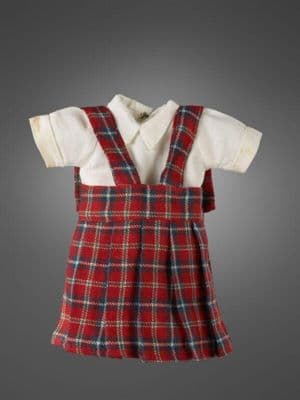
These two garments reveal how tartan's romantic mythology traveled from Victorian fantasy to mid-century pragmatism. The cape's theatrical proportions and dramatic collar speak to the 19th-century obsession with Highland romance—all swirling wool and Celtic nostalgia—while the 1950s pinafore reduces that same plaid passion to something a schoolgirl could actually wear.
Text
Echoes Across Time
Victorian Late / Bustle → 1950s · 70yr66%
SHARED
These two garments reveal how tartan's romantic mythology traveled from Victorian fantasy to mid-century pragmatism. The cape's theatrical proportions and dramatic collar speak to the 19th-century obsession with Highland romance—all swirling wool and Celtic nostalgia—while the 1950s pinafore reduces that same plaid passion to something a schoolgirl could actually wear.
Influences·Scottish Highland dress
Victorian Late / Bustle → Romantic · 60yr66%
Pull the Thread→
Follow this garment wherever the graph leads