V&A
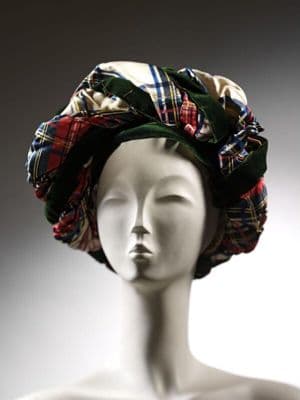
White Tartan Silk Turban Hat with Green Ribbon
Romantic · 1820s · British
Production
handmade
Material
silk tartan
Culture
British
Movement
Romantic Orientalism
Influences
Scottish Highland dress · Oriental turban styling
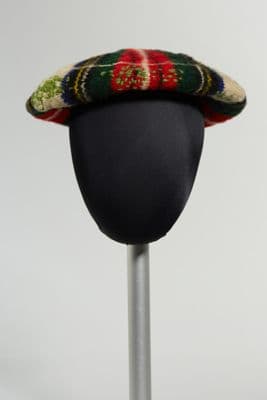
A voluminous turban-style hat constructed from white-ground tartan silk with a complex plaid pattern in red, green, and black. The fabric is wrapped and gathered to create a full, rounded silhouette that sits high on the head. Green velvet ribbon trim accents the construction, likely securing the wrapped fabric. The tartan pattern shows the characteristic geometric intersecting lines of Scottish plaid weaving. The substantial volume and elaborate wrapping technique reflects the Romantic era's preference for dramatic headwear that complemented the period's emphasis on ornate dress and cultural romanticism of Scottish heritage.
hat
Connected To
Influences·Scottish Highland dressTechnique·hand-weaving
SHARED140 years · cross-culture
These two pieces trace the curious journey of Scottish tartan from Highland necessity to Romantic fantasy. The 19th-century turban transforms clan plaid into orientalist theater—all that silk draped and twisted into something a Victorian lady might wear to a costume ball, the tartan's military crispness dissolved into decorative swags.
Text78%
Image85%
Entity43%
Influences·Scottish Highland dress
SHARED60 years · cross-culture · cross-category
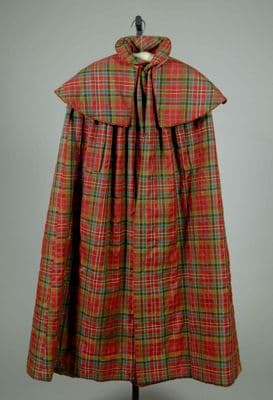
These two pieces reveal how tartan traveled from Scottish Highland utility into Victorian fantasy and romantic orientalism. The cape wraps its wearer in the full ceremonial weight of clan identity—that red, green, and gold plaid speaking to American fascination with Celtic heritage during the bustle era's obsession with historical dress.
Text
Technique·draping
LINEAGE10 years→ directed
Lineage: “Oriental turban styling”
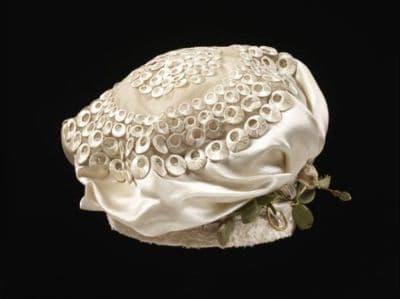
These two turbans trace the evolution of Regency England's obsession with "Oriental" exoticism, from the Empire period's pristine silk satin version adorned with delicate cutwork circles to the Romantic era's bolder tartan interpretation a decade later. The first turban embodies the refined restraint of early 1800s fashion—that ivory silk draped with mathematical precision and decorated with those perfectly spaced eyelets that catch light like dewdrops.
Technique·drapingTechnique·hand-weaving
SHARED200 years · cross-culture · cross-category
Text53%
Pull the Thread→
Follow this garment wherever the graph leads