V&A
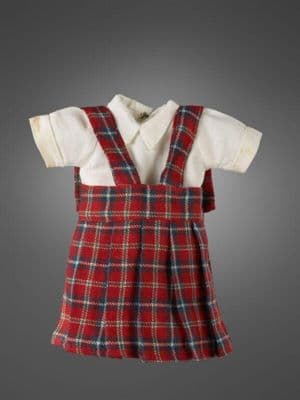
Red Navy Green Tartan Wool Pinafore Dress
1950s · 1950s · French
Production
ready-to-wear
Material
wool tartan
Culture
French
Movement
New Look / Post-War
Influences
Scottish Highland dress · 1950s school uniform styling
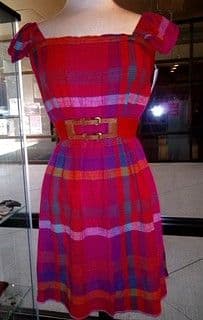
A children's ensemble consisting of a white cotton blouse with short sleeves and pointed collar paired with a sleeveless A-line jumper in red, navy, and green tartan plaid. The jumper features wide shoulder straps and a V-neckline, designed to be worn over the blouse. The tartan pattern shows a classic Scottish check with intersecting lines forming rectangular blocks. The silhouette reflects 1950s children's fashion with its neat, structured appearance and practical layering system. The construction appears machine-sewn with clean finishing typical of mid-century ready-to-wear children's clothing. The ensemble demonstrates the post-war embrace of colorful, cheerful designs for children's wardrobes.
dressa-lineabove-the-knee
Connected To
Influences·Scottish Highland dress
SHARED70 years · cross-culture · cross-category
These two garments reveal how tartan's romantic mythology traveled from Victorian fantasy to mid-century pragmatism. The cape's theatrical proportions and dramatic collar speak to the 19th-century obsession with Highland romance—all swirling wool and Celtic nostalgia—while the 1950s pinafore reduces that same plaid passion to something a schoolgirl could actually wear.
Text
Echoes Across Time
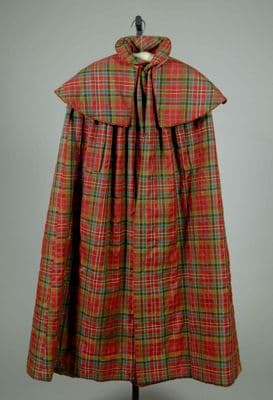
Victorian Late / Bustle → 1950s · 70yr66%
SHARED
These two garments reveal how tartan's romantic mythology traveled from Victorian fantasy to mid-century pragmatism. The cape's theatrical proportions and dramatic collar speak to the 19th-century obsession with Highland romance—all swirling wool and Celtic nostalgia—while the 1950s pinafore reduces that same plaid passion to something a schoolgirl could actually wear.
Influences·Scottish Highland dress
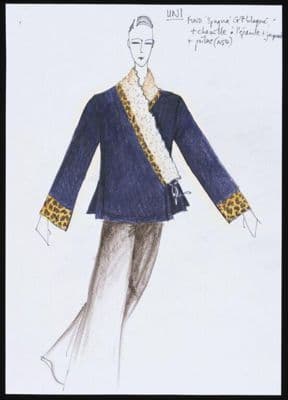
1980s → 1950s · 40yr45%
Pull the Thread→
Follow this garment wherever the graph leads