THE MET
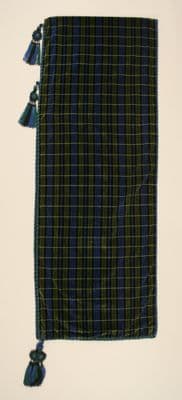
Navy Blue Forest Green Silk Plaid Hood
Victorian Early / Crinoline · 1860s · American
Production
handmade
Material
silk plaid
Culture
American
Influences
Scottish tartan tradition
A rectangular plaid hood constructed from silk in a dark tartan pattern of navy blue, forest green, and black intersecting lines. The fabric appears to be a fine silk with a smooth finish that creates crisp geometric lines in the plaid pattern. The hood features decorative silk tassels attached at strategic points - visible are blue tassels that appear to be made from twisted silk threads. The construction is simple and practical, designed to wrap around the head and shoulders for warmth and modesty. The edges appear to be finished with narrow hems. This type of hooded wrap was typical of mid-19th century American women's outerwear accessories, providing both function and fashionable plaid patterning that was popular during the Victorian era.
headband/head covering/hair accessory
Connected To
Influences·Scottish tartan traditionTechnique·machine-weaving
SHARED110 years · cross-culture · cross-category
The Victorian silk hood's navy and forest green plaid carries the same genetic code as the 1970s cotton check shirt—both descendants of Scottish tartan weaving, but one whispers while the other speaks plainly.
Text63%
Image78%
Entity37%
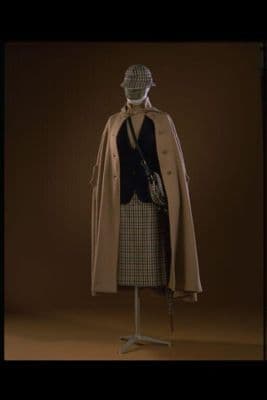
Influences·Scottish tartan traditionTechnique·machine-weaving
SHARED110 years · cross-culture · cross-category
These pieces are bound by plaid's stubborn refusal to behave like other patterns — both the Victorian silk hood's crisp navy and forest grid and the 1970s ensemble's softer houndstooth check carry that distinctly Scottish DNA that makes tartan feel like armor rather than decoration.

Influences·Scottish tartan traditionTechnique·machine-weaving
SHARED160 years · cross-culture · cross-category
That Victorian silk plaid hood and today's tartan blazer are separated by 160 years but united by Scotland's most enduring export: the mesmerizing geometry of intersecting colored bands that transforms simple cloth into cultural code.
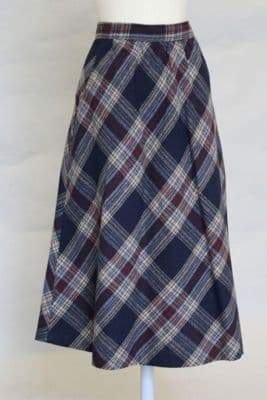
Influences·Scottish tartan traditionTechnique·machine-weaving
SHARED120 years · cross-category
These two pieces trace the long American romance with Scottish tartan, but reveal how radically context transforms meaning. The Victorian silk hood, with its deep forest and navy checks and those dangling tassels, carries the Gothic Revival's obsession with medieval authenticity—this is tartan as costume drama, precious and historically performative.
Pull the Thread→
Follow this garment wherever the graph leads