V&A
White Burgundy Silk Korean Hanbok Ensemble
Korean Traditional · 1980s · Korean
Production
handmade
Material
silk
Culture
Korean
Influences
traditional Korean hanbok construction
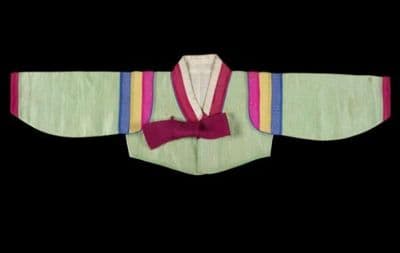
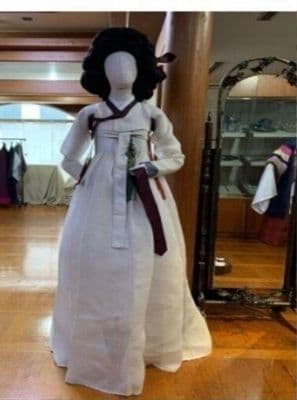
This Korean hanbok ensemble features the traditional two-piece construction of jeogori (jacket) and chima (skirt). The white silk jeogori has a fitted bodice with narrow sleeves and appears to tie with burgundy ribbon at the chest. The voluminous white chima extends from a high empire waistline to floor length, creating the characteristic bell-shaped silhouette. The garment demonstrates traditional Korean tailoring techniques with clean lines and minimal ornamentation. The high contrast burgundy sash provides the primary color accent against the pristine white silk. The construction emphasizes the flowing, graceful movement typical of hanbok design while maintaining the formal dignity appropriate for ceremonial occasions.
dressa-linefloor length
Connected To
Influences·traditional Korean hanbok constructionWorn with·chimaWorn with·jeogori
SHARED60 years · cross-category
Echoes Across Time
Roaring Twenties / Art Deco → Korean Traditional · 60yr76%
SHARED
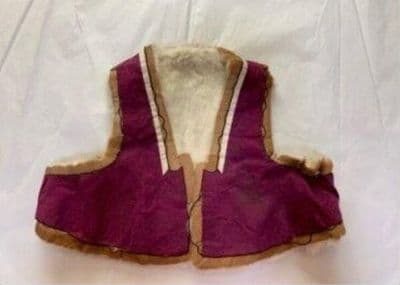
These two pieces reveal how Korean hanbok construction travels through time while adapting to different contexts. The 1920s purple vest borrows the hanbok's signature curved seam lines and silk-on-silk layering principle, but compresses the traditional jeogori jacket into a fitted Western-style vest that could slip under a flapper dress.
Influences·traditional Korean hanbok constructionWorn with·chimaWorn with·jeogori
Pull the Thread→
Follow this garment wherever the graph leads