V&A
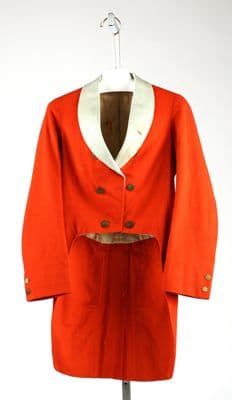
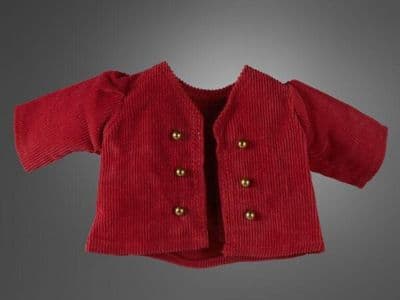
Red Cotton Corduroy Military Style Doll Jacket
1950s · 1950s · French
Production
handmade
Material
cotton corduroy
Culture
French
Movement
New Look / Post-War
Influences
military uniform styling · 1950s children's fashion
A miniature red cotton corduroy jacket designed for a doll, featuring a military-inspired double-breasted front with six brass buttons arranged in two parallel columns. The jacket displays structured tailoring with defined lapels and a fitted silhouette that reflects 1950s children's fashion. The corduroy fabric shows a fine-wale texture, and the garment construction includes set-in sleeves and precise seaming typical of quality doll clothing. The brass buttons are evenly spaced and appear to be functional, demonstrating attention to detail in the miniature garment's construction. The overall design mirrors adult military-style jackets popular in post-war fashion, scaled down for doll play.
jacketregular fitcollarlesship length
Connected To
Influences·military uniform styling
SHARED70 years · cross-culture
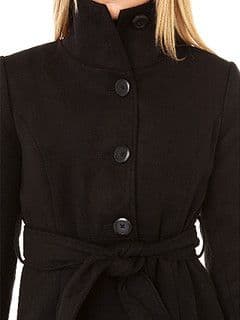
The black coat's sharp double-breasted silhouette and gleaming brass buttons trace a direct line back to the red corduroy doll jacket's miniature military precision, both borrowing the authoritative language of uniform dressing but translating it into civilian territory. What separates them isn't just scale—adult versus child's plaything—but intent: the 1980s coat weaponizes military structure for power dressing, while the 1950s jacket domesticates it into something safe and sweet.
Echoes Across Time

1980s → 1950s · 70yr62%
SHARED
The black coat's sharp double-breasted silhouette and gleaming brass buttons trace a direct line back to the red corduroy doll jacket's miniature military precision, both borrowing the authoritative language of uniform dressing but translating it into civilian territory. What separates them isn't just scale—adult versus child's plaything—but intent: the 1980s coat weaponizes military structure for power dressing, while the 1950s jacket domesticates it into something safe and sweet.
Influences·military uniform styling
2020s → 1950s
Pull the Thread→
Follow this garment wherever the graph leads