V&A
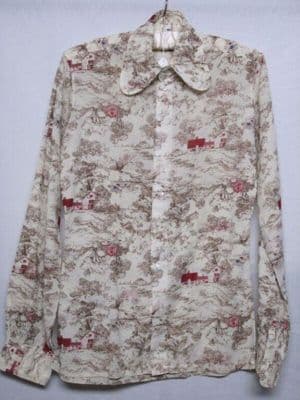
Cream Cotton Shirt with Burgundy Brown Toile Print
1970s · 1970s · British
Designer
Deborah & Clare
Production
ready-to-wear
Material
printed cotton
Culture
British
Movement
Romantic Revival · Hippie / Counterculture
Influences
French toile tradition · pastoral romanticism
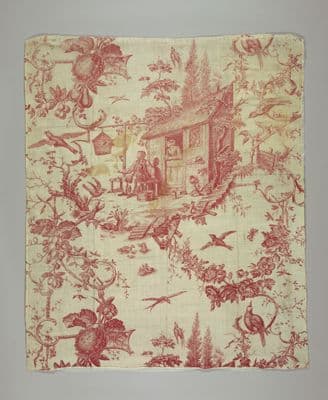
A long-sleeved cotton shirt featuring an all-over toile-style print in burgundy and brown tones on a cream ground. The print depicts pastoral scenes with buildings, trees, and figures in a traditional French toile manner. The shirt has a pointed collar, button-front closure, and long sleeves with button cuffs. The fit appears relaxed through the body with a straight hem. The fabric appears lightweight and crisp, typical of cotton shirting. This represents the 1970s trend of incorporating decorative prints and romantic imagery into casual menswear, moving away from the stark minimalism of earlier decades toward more expressive, pattern-rich clothing.
shirtregular fitround neckhip length
Connected To
Movement·Romantic Revival
SHARED130 years · cross-culture · cross-category
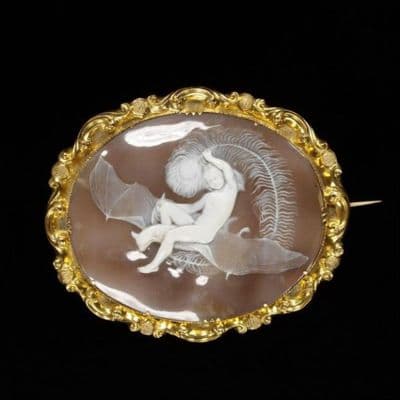
The Victorian cameo's carved Ariel—caught mid-flight with flowing hair and gossamer wings—shares the same romantic escapism as the '70s shirt's toile print, where pastoral scenes drift across cream cotton like daydreams. Both pieces traffic in fantasy, the cameo offering mythological transport while the shirt wraps its wearer in an idealized countryside that never quite existed.
Echoes Across Time
Romantic → 1970s · 130yr57%
SHARED
The Victorian cameo's carved Ariel—caught mid-flight with flowing hair and gossamer wings—shares the same romantic escapism as the '70s shirt's toile print, where pastoral scenes drift across cream cotton like daydreams. Both pieces traffic in fantasy, the cameo offering mythological transport while the shirt wraps its wearer in an idealized countryside that never quite existed.
Movement·Romantic Revival

Neoclassical Transition → 1970s · 190yr52%
Pull the Thread→
Follow this garment wherever the graph leads