SMITHSONIAN
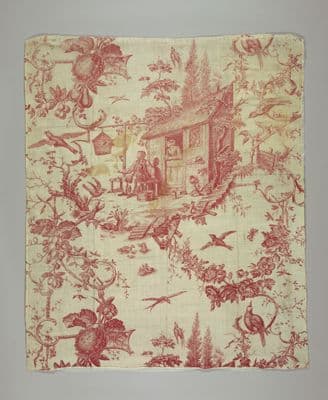
Cream Cotton Toile with Rose Red Pastoral Print
Revolutionary / Directoire · 1790s · French
Production
mass-produced
Material
cotton
Culture
French
Influences
toile de Jouy tradition
This French Revolutionary period textile displays a toile-style pattern printed in rose red on cream cotton. The design features pastoral scenes with architectural elements including buildings with distinctive rooflines, surrounded by elaborate floral motifs including large blooming roses and flowing botanical elements. Small birds are scattered throughout the composition. The pattern repeats in a traditional toile manner, with scenic vignettes integrated into flowing decorative borders of flowers and foliage. The single-color printing technique creates varying tonal depths through line density and cross-hatching. This type of cotton printing was characteristic of French textile production during the 1790s, when pastoral and romantic imagery dominated decorative arts despite the political upheaval of the Revolutionary period.
Connected To
Technique·block-printing
LINEAGE230 years · cross-category→ directed
Lineage: “French pastoral imagery”
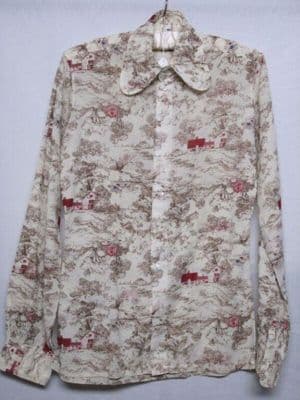
These two pieces span the entire lifespan of toile de Jouy, from its 18th-century origins to its contemporary revival. The antique fragment shows the classic pastoral vignettes—those romantic ruins and flowering branches—that made Christophe-Philippe Oberkampf's factory famous, printed in the signature rose-red that was easier to achieve than the coveted indigo blue.
Text75%
Image48%
Entity20%
41%
Motif·bird-figurative
SHARED130 years · cross-culture · cross-category
Text55%
Image
41%
Technique·block-printing
SHARED180 years · cross-culture · cross-category
Text79%
Image
Technique·block-printing
SHARED140 years · cross-culture · cross-category
Text54%
Image
Echoes Across Time

Revolutionary / Directoire → 2020s · 230yr51%
LINEAGE
These two pieces span the entire lifespan of toile de Jouy, from its 18th-century origins to its contemporary revival. The antique fragment shows the classic pastoral vignettes—those romantic ruins and flowering branches—that made Christophe-Philippe Oberkampf's factory famous, printed in the signature rose-red that was easier to achieve than the coveted indigo blue.
Technique·block-printing
Baroque → Revolutionary / Directoire · 130yr41%
Pull the Thread→
Follow this garment wherever the graph leads