SMITHSONIAN
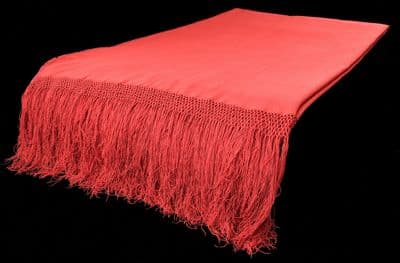
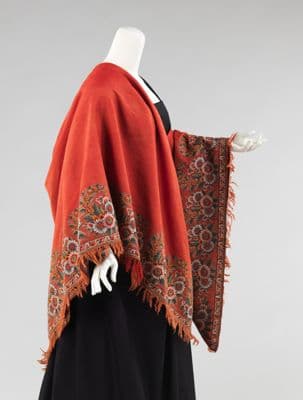
Susan B. Anthony's Silk Shawl
Victorian Early / Crinoline · 1850s · American
Production
handmade
Material
silk
Culture
American
Influences
Kashmir shawl tradition · European paisley shawl styling
A rectangular silk shawl in vibrant coral-red with an extensive deep fringe border along one edge. The main body appears to be plain-weave silk with a smooth, lustrous surface typical of mid-19th century textile production. The fringe is densely knotted and measures approximately 6-8 inches in length, creating substantial visual weight and movement. This type of large, fringed shawl was essential to Victorian women's wardrobes, worn over fitted bodices and full skirts for warmth and modesty. The rich color suggests it was likely reserved for special occasions or public appearances, as such vivid dyes were expensive and prone to fading.
scarf
Connected To
Influences·Kashmir shawl traditionTechnique·hand-weaving
SHARED50 years · cross-culture
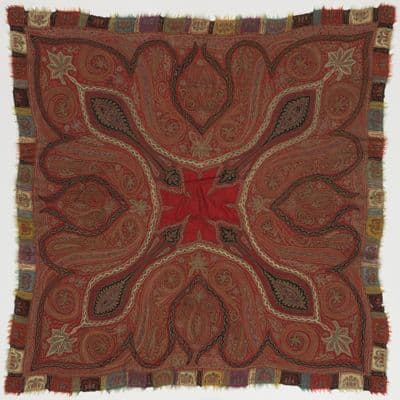
These two red shawls trace the journey of the Kashmir shawl from European luxury to American practicality across fifty years of changing taste. The French wool example still carries the dense, botanical intricacy of its Kashmiri prototype—those swirling paisleys crowding every inch of the border like a textile garden—while Susan B. Anthony's silk version has been stripped down to pure geometry: solid coral punctuated only by that decisive fringe.
Text73%
Image73%
Entity36%
Influences·Kashmir shawl traditionTechnique·hand-weaving
SHARED50 years · cross-culture
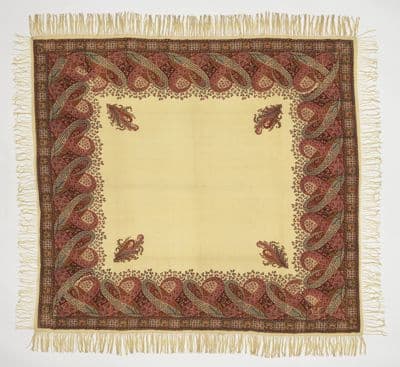
The ornate paisley Kashmir shawl and Susan B. Anthony's plain red silk shawl represent the beginning and end of a cultural journey—the first shows the intricate boteh motifs and complex weaving that made Indian shawls the ultimate luxury accessory of the early 1800s, while Anthony's austere version strips away all ornament, keeping only the essential silhouette and that signature fringe.
Influences·Kashmir shawl tradition
SHARED10 years · cross-culture
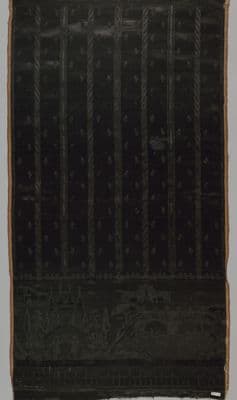
These two shawls trace the global journey of Kashmir's legendary textile craft, but they've landed in completely different worlds. Anthony's crimson silk piece strips the tradition down to its essence—that hypnotic fringe becomes the entire statement, turning what was once ornamental edging into a bold modernist gesture.
Text
Worn with·corsetTechnique·hand-weaving
SHARED80 years · cross-culture · cross-category
Text61%
Pull the Thread→
Follow this garment wherever the graph leads