SMITHSONIAN
Ivory Organza A-Line Wedding Dress with Beaded Lace
1990s · 1980s · American
Production
ready-to-wear
Material
synthetic organza
Culture
American
Movement
Supermodel Era
Influences
Victorian revival romantic styling · 1980s power shoulder silhouette
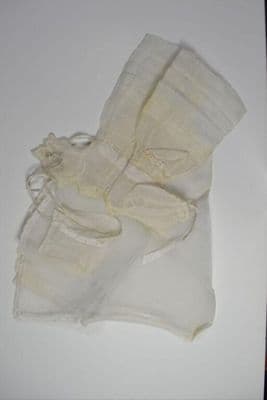
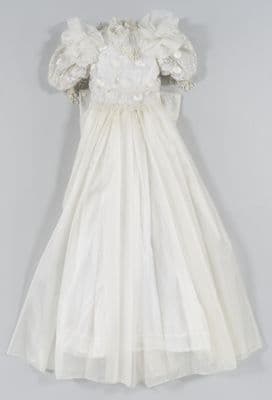
This 1980s wedding gown features a fitted bodice with dramatically puffed sleeves constructed from layers of ruffled organza that create substantial volume at the shoulders. The bodice appears to have beaded or embellished detailing across the chest area. The skirt extends into a full ballgown silhouette with multiple tiers of synthetic organza creating a voluminous, floor-length train. The construction shows typical 1980s bridal fashion characteristics with its emphasis on dramatic proportions and romantic excess. The synthetic organza fabric gives the dress a structured yet ethereal quality, with the layered construction creating depth and movement throughout the skirt portion.
dressa-lineoff-the-shoulderfloor length
Connected To
Worn with·petticoatWorn with·undergarmentsWorn with·veil
Echoes Across Time
Roaring Twenties / Art Deco → 1990s · 50yr69%
SHARED
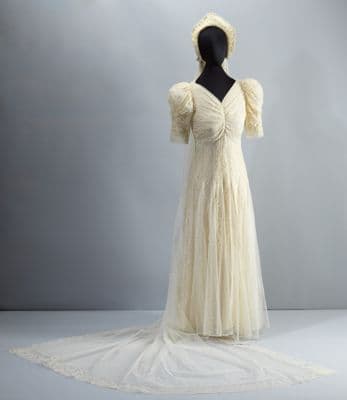
These two wedding gowns reveal how bridal drama migrated from the sleeves to the skirt over seven decades. The 1920s dress channels its theatrical energy into those magnificent puffed sleeves—architectural clouds of gathered fabric that make the bride's torso the star—while keeping the skirt relatively restrained in its A-line sweep.
Worn with·petticoatWorn with·undergarmentsWorn with·veil
Pull the Thread→
Follow this garment wherever the graph leads