SMITHSONIAN
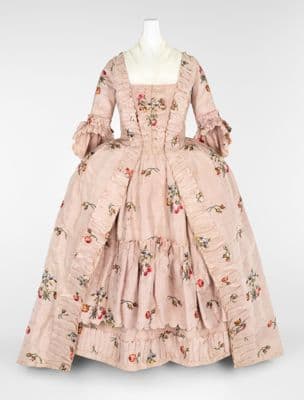
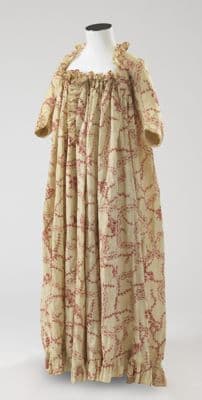
Cream Cotton Chintz Sack-Back Gown with Floral Print
Rococo · 1770s · English
Production
handmade
Material
cotton chintz
Culture
English
Movement
Chinoiserie
Influences
Indian chintz textiles · French sack-back construction
This English sack-back gown demonstrates the characteristic loose-fitting silhouette of 1770s informal dress. The garment flows freely from the shoulders in continuous pleats, creating the distinctive watteau back that defines the sack gown style. Constructed from cotton chintz printed with delicate floral sprays in rose and green on a cream ground, the fabric represents the period's fascination with imported Indian textiles and botanical motifs. The three-quarter sleeves end in gathered cuffs, while the round neckline is finished with self-fabric trim. The gown's construction relies on gathered fullness rather than structured shaping, making it suitable for domestic wear and reflecting the Rococo period's embrace of naturalistic, unstructured silhouettes in informal contexts.
dresstentround neckfloor length
Connected To
59%
Worn with·chemiseWorn with·pocket hoops
SHARED10 years · cross-culture
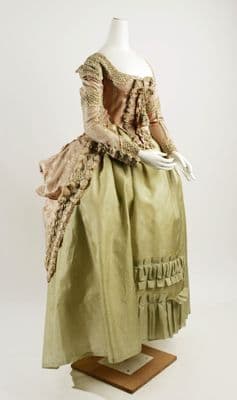
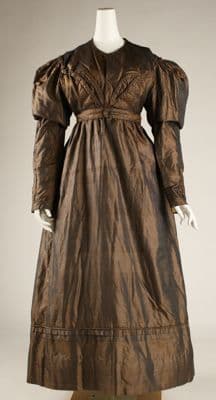
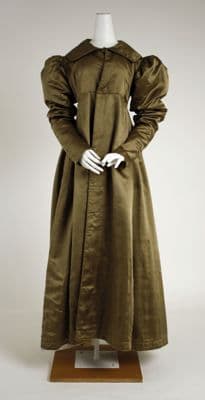
These two gowns capture the precise moment when fashion's center of gravity shifted from England's chintz-mad drawing rooms to France's neoclassical salons. The earlier English sack-back gown, with its cascading watteau pleats and busy floral chintz, represents the Rococo's love affair with botanical excess and loose, unstructured silhouettes.
Pull the Thread→
Follow this garment wherever the graph leads