V&A
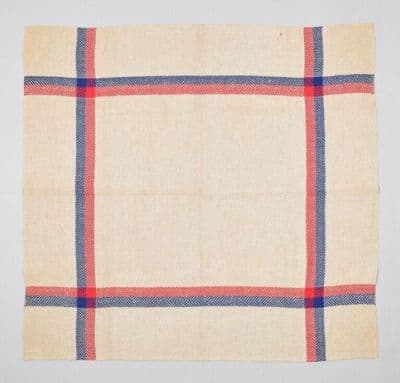
Cream Linen Silk Square Scarf Windowpane Check
Great Depression · 1930s · British
Designer
Arnson
Production
ready-to-wear
Material
linen and silk blend
Culture
British
Influences
Scottish tartan tradition · windowpane check pattern
A square textile piece featuring a classic windowpane check pattern on a cream-colored ground. The design consists of intersecting horizontal and vertical bands in navy blue and coral red, creating a regular grid of rectangular compartments. The weave appears to be a plain tabby structure typical of linen-silk blends, with the colored bands likely achieved through warp and weft striping during the weaving process. The proportions and scale of the check pattern reflect 1930s textile design sensibilities, with moderately spaced bands that create visual interest without overwhelming the neutral base. The piece demonstrates the period's preference for practical yet stylish accessories that could complement both casual and semi-formal attire.
scarf
Connected To
Influences·Scottish tartan tradition
SHARED90 years · cross-culture · cross-category
That red-striped plaid blazer and the cream windowpane scarf are separated by nearly a century, but they're both descendants of Scottish Highland dress — one a loud, confident descendant, the other a whispered cousin. The blazer takes tartan's bold intersecting lines and amplifies them into statement dressing, while the Depression-era scarf distills the same grid logic into something almost apologetically refined, its red and blue lines barely interrupting the cream field.
Text47%
Image37%
Entity33%
Influences·Scottish tartan tradition
SHARED70 years · cross-culture · cross-category
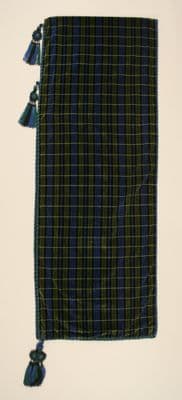
These two pieces trace the long shadow of Scottish tartan across different continents and social classes. The Victorian silk hood carries the dense, jewel-toned complexity of clan tartans—that forest green and navy weave speaks to tartan's aristocratic origins and its adoption by fashionable American society.
Text
Influences·Scottish tartan tradition
SHARED50 years · cross-culture · cross-category
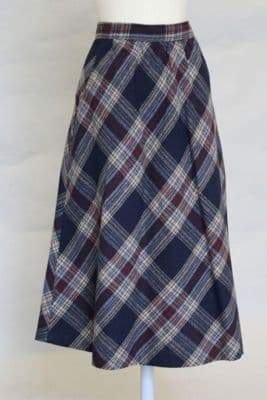
These two pieces reveal how Scottish tartan's genetic code mutates as it travels through class and time. The 1980s skirt translates tartan's dense, overlapping plaid into a proper A-line silhouette — all that burgundy and navy complexity tamed into American sportswear respectability.
Text56%
Influences·Scottish tartan tradition
SHARED40 years · cross-culture · cross-category
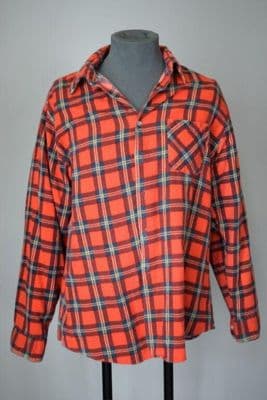
The flannel shirt's bold red-and-black checks and the scarf's restrained cream windowpane both descend from Scottish tartan, but they've traveled vastly different social paths to get here. Where the Depression-era scarf whispers its geometric restraint in muted linen—a genteel nod to clan patterns stripped of their Highland drama—the 1970s flannel shouts its plaid inheritance in saturated cotton, transformed from aristocratic signifier to working-class uniform.
Echoes Across Time

2020s → Great Depression · 90yr64%
SHARED
That red-striped plaid blazer and the cream windowpane scarf are separated by nearly a century, but they're both descendants of Scottish Highland dress — one a loud, confident descendant, the other a whispered cousin. The blazer takes tartan's bold intersecting lines and amplifies them into statement dressing, while the Depression-era scarf distills the same grid logic into something almost apologetically refined, its red and blue lines barely interrupting the cream field.
Influences·Scottish tartan tradition
Victorian Early / Crinoline → Great Depression
Pull the Thread→
Follow this garment wherever the graph leads