V&A
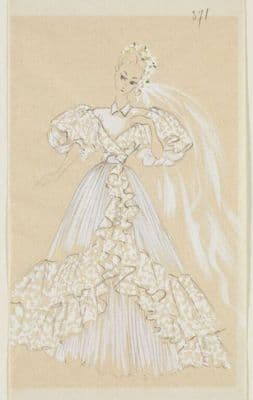
White Silk Wedding Gown with Lace Flounces
Wartime / Utility Fashion · 1940s · French
Designer
House of Worth
Production
haute couture
Material
silk
Culture
French
Influences
Victorian wedding dress tradition · 1940s shoulder emphasis
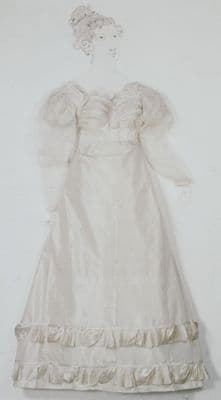
This House of Worth fashion sketch depicts a wedding gown with a fitted bodice featuring off-shoulder sleeves and a dramatically full skirt. The design showcases multiple tiers of deep lace flounces cascading down the skirt in horizontal bands, creating substantial volume despite wartime fabric restrictions. The bodice appears closely fitted through the torso with what seems to be a sweetheart neckline partially covered by draped fabric or lace at the shoulders. A long train extends behind the figure, and the bride wears what appears to be a floral crown or headpiece with a flowing veil. The sketch technique uses delicate line work on cream paper, typical of couture design drawings, emphasizing the garment's romantic silhouette and elaborate lace detailing that would have been luxurious during the 1940s.
dressfit and flareoff-the-shoulderfloor length
Connected To
Influences·1940s shoulder emphasis
SHAREDsame era · cross-culture · cross-category
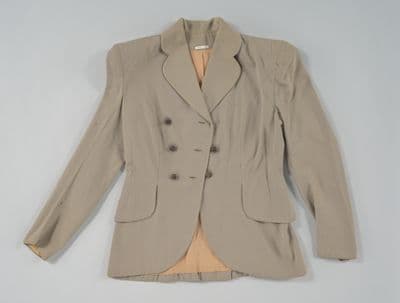
These two garments reveal how wartime austerity shaped silhouettes across drastically different occasions and continents. The taupe jacket's sharp, military-inspired shoulders and streamlined double-breasted front echo the same structural emphasis visible in the wedding gown's fitted bodice and pronounced shoulder line—both following the decade's rationed approach to fabric that pushed drama upward into the shoulder and neckline.
Echoes Across Time
1980s → Wartime / Utility Fashion · 40yr56%
SHARED
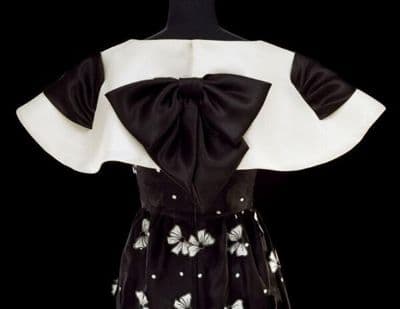
The black bow cascading down the back of that 1980s evening dress and the tumbling lace flounces on the wartime wedding gown both understand that drama lives in the details that trail behind you. One uses stark graphic contrast—that theatrical bow against crisp white organza—while the other builds its romance through layers of delicate lace that seem to spill like cream down the skirt.
Worn with·petticoatWorn with·undergarmentsTechnique·couture-construction
Pull the Thread→
Follow this garment wherever the graph leads