V&A
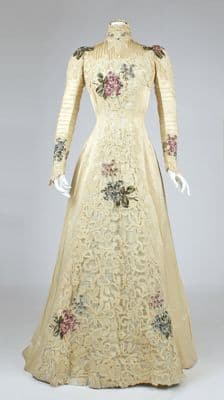
Cream Printed Silk Taffeta Edwardian Wedding Dress
Edwardian · 1900s · English
Production
handmade
Material
printed silk taffeta
Culture
English
Movement
Arts and Crafts movement
Influences
Empire waistline revival · Arts and Crafts movement textile design
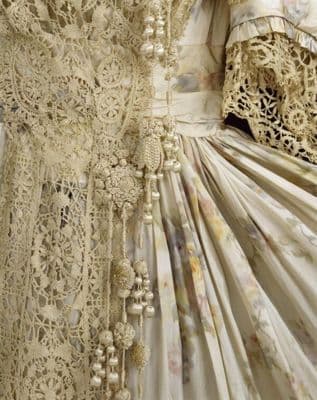
This Edwardian wedding gown features a high-waisted empire silhouette characteristic of the period's softer, less corseted aesthetic. The printed silk taffeta displays delicate floral motifs in muted tones across an ivory ground. The bodice is fitted through the torso with what appears to be internal boning or stays, creating a smooth line from bust to natural waist. Long fitted sleeves extend to the wrists with subtle gathering at the shoulders. The skirt falls in controlled fullness from the high waistline, creating the columnar silhouette favored in the early 1900s. Intricate handmade lace trim adorns the neckline, sleeves, and likely the hem, demonstrating the period's emphasis on fine needlework and feminine detail in bridal attire.
dressfit and flarehigh neckfloor length
Connected To
64%
Influences·Empire waistline revival
SHARED10 years · cross-culture
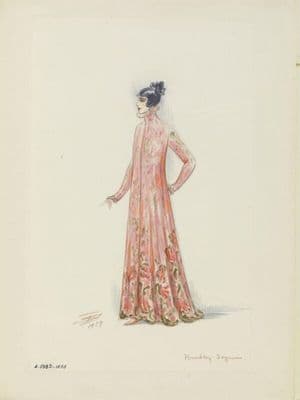
Both gowns ride the same wave of Neoclassical revival that swept through the 1900s and 1910s, but they catch it at different moments. The Edwardian wedding dress, with its empire waist buried under cascades of intricate lace and dimensional florals, still clings to Victorian excess—it's neoclassicism filtered through a maximalist lens.
Echoes Across Time
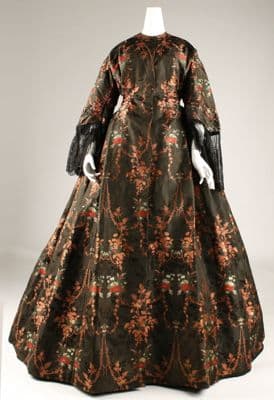
Victorian Late / Bustle → Edwardian · 40yr58%
SHARED
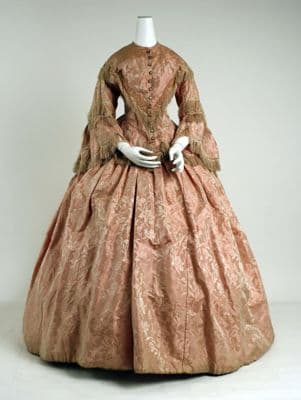
These two gowns reveal how Victorian excess gave way to Edwardian refinement through the language of surface decoration. The earlier brown brocade dress speaks in the heavy, almost masculine vocabulary of woven florals—roses and foliage that seem carved into the silk itself—while the cream Edwardian gown whispers with delicate printed posies scattered like confetti across its taffeta surface.
Worn with·chemiseWorn with·corsetWorn with·petticoat
Pull the Thread→
Follow this garment wherever the graph leads