THE MET
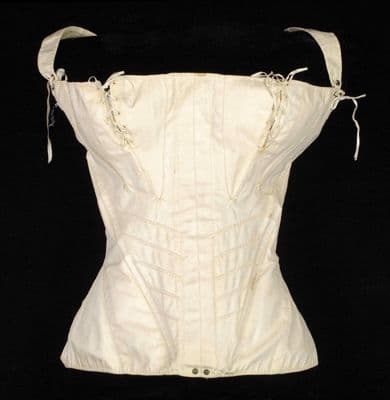
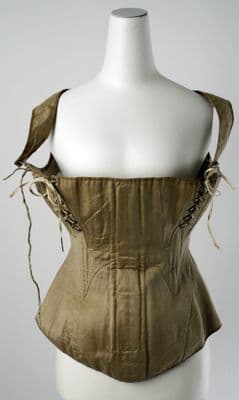
Olive Green Cotton Twill Romantic Corset
Romantic · 1830s · American
Production
handmade
Material
cotton twill
Culture
American
This olive-green cotton corset features the characteristic long-waisted silhouette of the Romantic period, extending well below the natural waistline. The garment is constructed with vertical boning channels creating structured panels that shape the torso into the fashionable conical form of the era. Wide shoulder straps attach at the bust line and tie at the shoulders with cotton tape ties. The front closure appears to use spiral lacing through metal eyelets, while additional lacing at the back would provide adjustable fit. The cotton twill fabric shows practical durability suitable for daily wear beneath the full-skirted dresses of the 1830s-1840s. The construction demonstrates typical American corsetry of the period, emphasizing function over the more decorative European examples.
top/t-shirt/sweatshirttight fitsweethearthip length
Connected To
Worn with·chemiseWorn with·dressWorn with·petticoat
SHARED50 years · cross-category
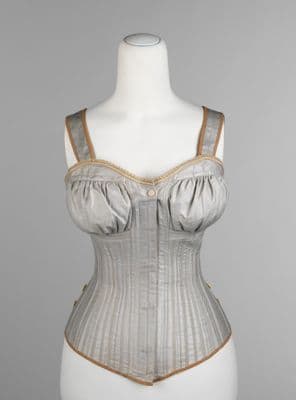
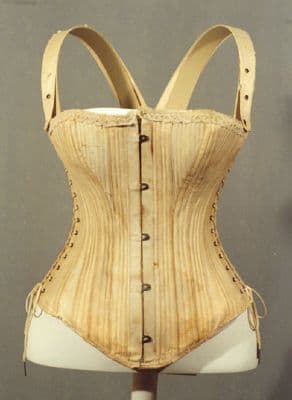
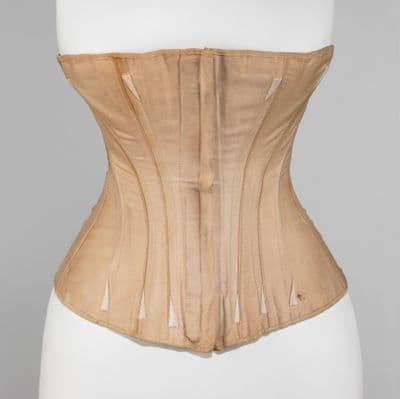
The Victorian corset's rigid geometry of steel bones and mathematical precision finds its romantic descendant in the olive green lace-up bodice, where the same waist-cinching imperative softens into something more like seduction than engineering. Where the cream coutil corset speaks in the language of proper foundation garments—hidden, structural, uncompromising—the green cotton twill version puts the corsetry on display, those shoulder ties and visible lacing turning underwear into outerwear.
Echoes Across Time
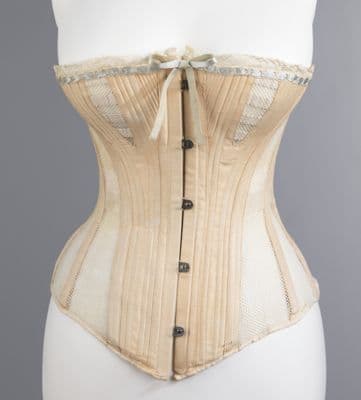
Victorian Late / Bustle → Romantic · 50yr61%
SHARED
The Victorian corset's rigid geometry of steel bones and mathematical precision finds its romantic descendant in the olive green lace-up bodice, where the same waist-cinching imperative softens into something more like seduction than engineering. Where the cream coutil corset speaks in the language of proper foundation garments—hidden, structural, uncompromising—the green cotton twill version puts the corsetry on display, those shoulder ties and visible lacing turning underwear into outerwear.
Worn with·chemiseWorn with·dressWorn with·petticoat
Pull the Thread→
Follow this garment wherever the graph leads