Victorian Late / Bustle · 1870s-1890s · American
Production
ready-to-wear
Material
cotton coutil
Culture
American
Influences
French corsetry techniques
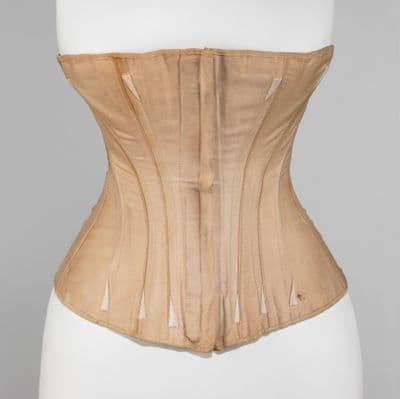
This wasp-waisted corset demonstrates the extreme silhouette fashionable during the 1880s bustle era. Constructed from sturdy cotton coutil in a neutral flesh tone, the garment features vertical whalebone channels creating pronounced curves that dramatically cinch the waist while supporting the bust and hips. The front closure shows a series of metal eyelets for tight lacing, while the back would have additional lacing for adjustment. The corset extends from just below the bust to the hips, creating the characteristic hourglass figure. Multiple seaming lines are visible, indicating careful pattern-making to achieve maximum waist reduction. The construction represents typical American corsetry of the period, when such undergarments were essential foundation pieces for achieving fashionable dress silhouettes.


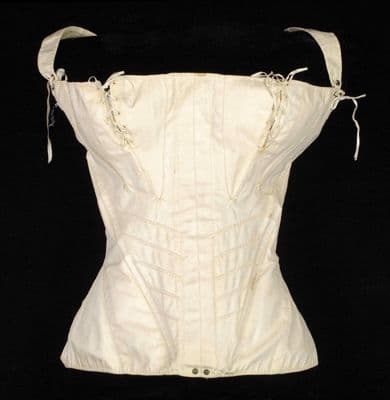
These two corsets reveal how the engineering of the female silhouette evolved while the basic architecture remained ruthlessly consistent. The earlier cream stays create their wasp waist through straight-line geometry—rigid vertical channels that compress the torso into a cone, while the later nude corset achieves the same brutal cinch through curved seaming that follows the body's contours before violently reshaping them.


Follow this garment wherever the graph leads
These two corsets reveal how the engineering of the female silhouette evolved while the basic architecture remained ruthlessly consistent. The earlier cream stays create their wasp waist through straight-line geometry—rigid vertical channels that compress the torso into a cone, while the later nude corset achieves the same brutal cinch through curved seaming that follows the body's contours before violently reshaping them.
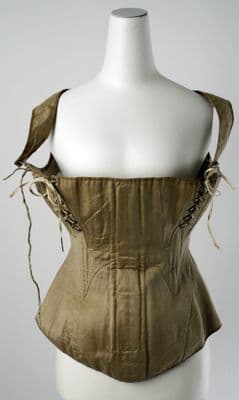
These two corsets reveal how the Romantic era's softer approach to waist compression became the Victorian blueprint for extreme body modification. The earlier olive corset, with its gentle bust cups and looser lacing, whispers where the later nude coutil shouts — both use the same curved seaming and boning channels, but the Victorian version has been weaponized into that infamous wasp waist through more aggressive shaping and what looks like steel boning.