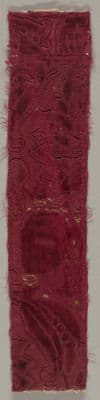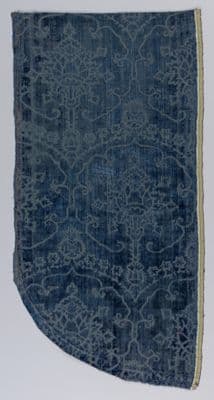
These two velvet fragments reveal how Renaissance luxury textiles evolved from their medieval predecessors while maintaining the same DNA of Byzantine-inspired grandeur. The burgundy Italian piece shows the Renaissance refinement of the pomegranate motif—those bulbous, symmetrical forms that became shorthand for aristocratic taste—while the blue fragment displays the earlier, more geometric interpretation of similar palatial patterns.