1980s · 1980s · British
Designer
Malcolm McLaren and Vivienne Westwood
Production
artisan-craft
Material
cotton jersey
Culture
British
Movement
Punk · Situationism · Power Dressing
Influences
punk DIY customization · situationist provocation
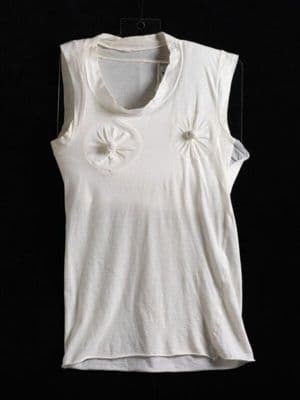
A white cotton sleeveless t-shirt featuring two strategically placed circular cutouts at chest level, each reinforced with hand-stitched radiating lines that create a starburst or flower-like pattern. The garment displays the raw, deconstructed aesthetic characteristic of McLaren and Westwood's punk designs, with visible hand-finishing around the cutouts that transforms functional openings into deliberate design elements. The sleeveless construction and scoop neckline create a simple silhouette that serves as canvas for the provocative chest modifications. The cotton appears to be standard jersey weight, and the overall construction maintains the DIY punk ethos of customization and subversion of conventional garment forms.


The leather jacket's aggressive asymmetrical zip and the t-shirt's defiant nipple cutouts both weaponize wardrobe basics, turning everyday garments into declarations of refusal. One borrows from biker rebellion, the other from punk's gleeful vandalism of propriety, but both understand that the most subversive gesture is often the smallest deviation from the expected.


Follow this garment wherever the graph leads
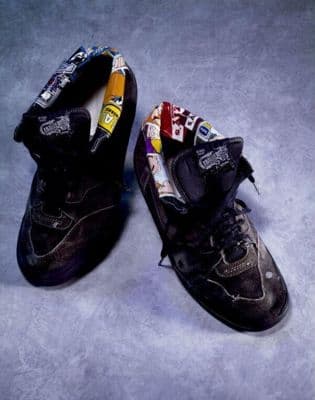
That white tank with its perfectly placed cutouts and the patch-bombed Vans are both products of punk's democratization of fashion—the radical idea that you could take scissors or needle to mass-produced clothing and make it yours. The tank's surgical precision, with those starburst holes revealing skin like deliberate wounds, shares DNA with the sneakers' anarchic collage of band patches and stickers, both transforming basic garments into personal manifestos.
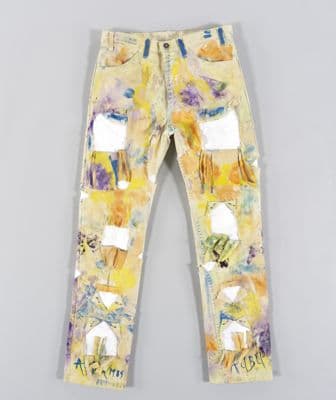
These pieces share punk's foundational grammar of strategic destruction, but speak it in completely different dialects. The jeans deploy cutouts as painterly gestures—those deliberate squares and rectangles punctuating a canvas of yellow and purple paint splatters, turning denim into wearable art that screams rather than whispers rebellion.
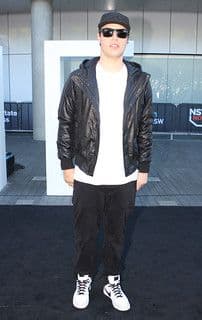
The leather jacket's aggressive asymmetrical zip and the t-shirt's defiant nipple cutouts both weaponize wardrobe basics, turning everyday garments into declarations of refusal. One borrows from biker rebellion, the other from punk's gleeful vandalism of propriety, but both understand that the most subversive gesture is often the smallest deviation from the expected.
The black leather jacket's aggressive zips and hardware speak the same language of deliberate destruction as the white tee's precisely cut nipple holes—both garments weaponize the body through strategic exposure and armor. Where the jacket builds fortress-like protection before selectively revealing (those mint racing stripes soften nothing), the tee strips down to vulnerability then punctures it with calculated provocation.