1990s · 1980s · American
Production
handmade
Material
cotton denim
Culture
American
Movement
Punk · Hip-Hop
Influences
punk DIY aesthetic · abstract expressionist painting
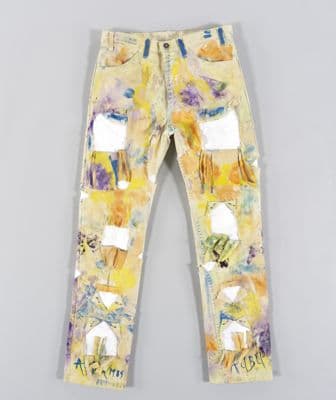
These straight-leg jeans feature extensive hand-painted decoration over a cream-colored denim base. The surface is covered with bold brushstrokes in yellow, purple, and orange paint, creating an abstract expressionist effect. Multiple deliberate cuts and tears expose white fabric patches underneath, suggesting either intentional distressing or repair work. The paint application appears thick and gestural, with visible brush marks and color bleeding. The waistband retains traditional five-pocket construction with metal hardware. This represents the DIY customization culture of early 1980s street fashion, where individuals transformed mass-produced garments into unique artistic statements through painting, cutting, and reconstruction techniques.


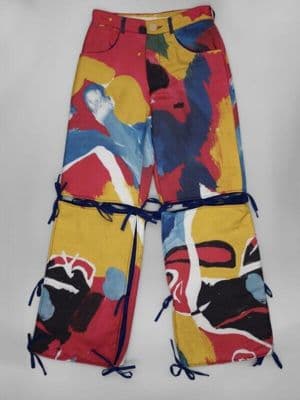
These pants are separated by decades but united by the same radical idea: that clothing can be a canvas for pure artistic expression. The earlier jeans transform denim into something like a Pollock drip painting, with hand-applied splatters of yellow and purple paint breaking through strategic cutouts that reveal white patches underneath—each rip and splash a deliberate rejection of denim's utilitarian roots.

Follow this garment wherever the graph leads
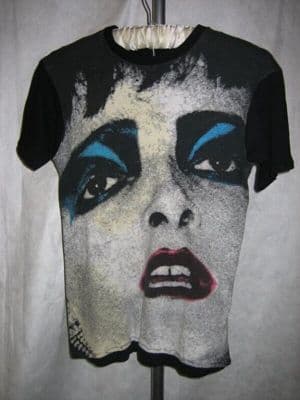
These pieces capture punk's twin impulses toward destruction and reconstruction, separated by geography but united in their refusal to stay quiet. The jeans transform denim's all-American innocence with aggressive cutouts and paint splatters that feel like controlled violence, while the Siouxsie tee broadcasts punk's theatrical defiance through her kohl-rimmed stare and sneering mouth.
These pants are separated by decades but united by the same radical idea: that clothing can be a canvas for pure artistic expression. The earlier jeans transform denim into something like a Pollock drip painting, with hand-applied splatters of yellow and purple paint breaking through strategic cutouts that reveal white patches underneath—each rip and splash a deliberate rejection of denim's utilitarian roots.
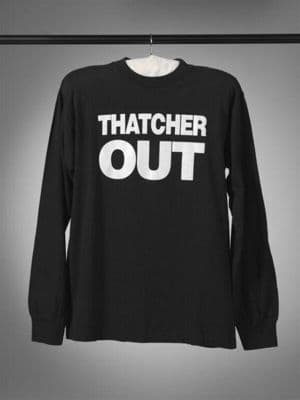
These two pieces trace the evolution of punk's confrontational spirit from Britain's council estates to America's art schools. The "THATCHER OUT" tee delivers its political punch with the blunt typography and utilitarian black cotton that defined early-80s British protest wear, while the paint-splattered, strategically shredded jeans translate that same rebellious energy into the more aestheticized grunge movement a decade later.
The black leather jacket's defiant asymmetrical zip and the paint-splattered jeans' deliberate destruction both carry punk's DNA, but they're separated by decades of gentrification. Where the jacket maintains punk's original menace—that diagonal zipper still reads as armor against conformity—the jeans transform rebellion into art project, their careful cutouts and pastel palette turning DIY destruction into something almost precious.

The black leather jacket's defiant asymmetrical zip and the paint-splattered jeans' deliberate destruction both carry punk's DNA, but they're separated by decades of gentrification. Where the jacket maintains punk's original menace—that diagonal zipper still reads as armor against conformity—the jeans transform rebellion into art project, their careful cutouts and pastel palette turning DIY destruction into something almost precious.