2010s · 2020s · Western
Production
ready-to-wear
Material
black leather
Culture
Western
Movement
Punk · Gorpcore
Influences
1950s motorcycle culture · punk appropriation
A classic black leather motorcycle jacket with asymmetrical front zipper closure and metal hardware. The jacket features a notched collar that can be worn upright, fitted sleeves with zippered cuffs, and appears to have diagonal zippered pockets at the waist. The silhouette is cropped and closely fitted through the torso, ending at the natural waistline. The leather appears to have a smooth, polished finish typical of motorcycle jackets. Silver-toned metal zippers and hardware provide functional and aesthetic contrast against the black leather. This style represents the adoption of utilitarian motorcycle gear into punk and alternative fashion subcultures.


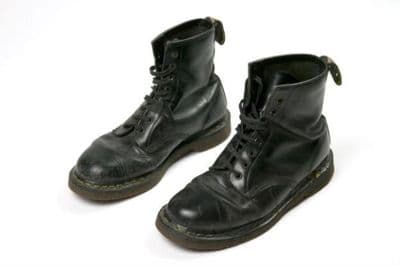
The motorcycle jacket's diagonal zip and the combat boots' aggressive lacing both weaponize leather into armor for the disaffected—one born from 1950s biker rebellion, the other from 1970s punk's deliberate ugliness. Forty years separate them, but they speak the same language of refusal: black leather as a uniform for those who've opted out, whether from a Triumph or a squat.
Follow this garment wherever the graph leads
The motorcycle jacket's diagonal zip and the combat boots' aggressive lacing both weaponize leather into armor for the disaffected—one born from 1950s biker rebellion, the other from 1970s punk's deliberate ugliness. Forty years separate them, but they speak the same language of refusal: black leather as a uniform for those who've opted out, whether from a Triumph or a squat.
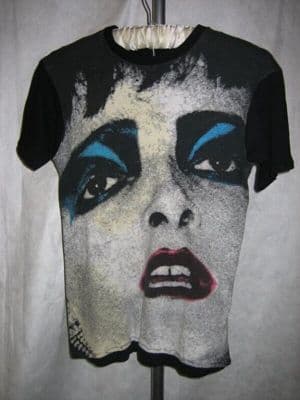
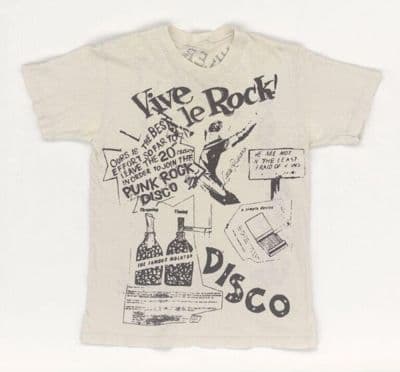
The black leather jacket's diagonal zip and militant silhouette carry forward the same rebellious DNA as the vintage tee's hand-drawn "Vive le Rock!" scrawl and safety-pin graphics—both garments weaponizing fashion as cultural dissent. What started as punk's DIY protest aesthetic in '70s Britain has evolved into today's sleek rebellion uniform, trading the tee's raw, xeroxed energy for leather's more polished aggression.
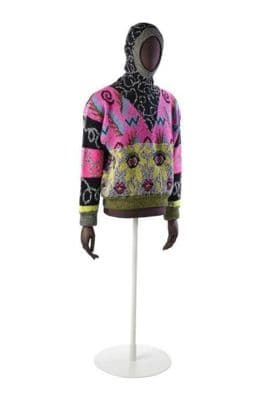
The black leather jacket's diagonal zip cuts the same rebellious line that punk drew through polite society in the 1970s, while that riotous pink-and-black hooded jumper carries punk's DNA into the rave era, where safety pins gave way to smiley faces and anarchy symbols morphed into acid house graphics.
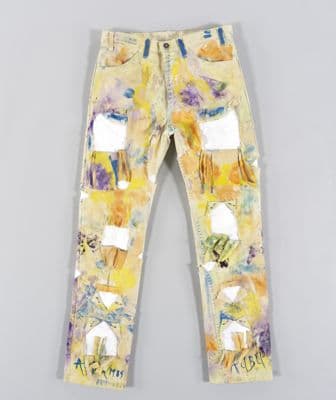
The black leather jacket's defiant asymmetrical zip and the paint-splattered jeans' deliberate destruction both carry punk's DNA, but they're separated by decades of gentrification. Where the jacket maintains punk's original menace—that diagonal zipper still reads as armor against conformity—the jeans transform rebellion into art project, their careful cutouts and pastel palette turning DIY destruction into something almost precious.


The black leather jacket's diagonal zip and militant silhouette carry forward the same rebellious DNA as the vintage tee's hand-drawn "Vive le Rock!" scrawl and safety-pin graphics—both garments weaponizing fashion as cultural dissent. What started as punk's DIY protest aesthetic in '70s Britain has evolved into today's sleek rebellion uniform, trading the tee's raw, xeroxed energy for leather's more polished aggression.