1970s · 2020s · Western
Production
ready-to-wear
Material
black leather
Culture
Western
Movement
Punk
Influences
1950s motorcycle culture · punk rebellion aesthetic
A classic black leather motorcycle jacket with asymmetrical front zipper closure and multiple zippered pockets. The jacket features a wide lapel collar, fitted sleeves, and cropped length ending at the waist. The leather appears to have a smooth, slightly glossy finish typical of motorcycle jackets. Silver-toned hardware including zippers and studs provide contrast against the black leather. The jacket is styled with mint green hair and dark makeup, emphasizing its role in punk and alternative subculture fashion. The fitted silhouette and structured shoulders create the iconic rebellious aesthetic associated with biker culture.
The black leather jacket's aggressive zippers and that defiant mint-green hair create the same visual rebellion as the grey lycra mini's body-conscious stretch—both garments weaponize the female form, just forty years apart. Where punk's leather armor announced "don't touch" through studs and hardware, this second-skin skirt whispers the same threat through its unforgiving fit that demands physical confidence.
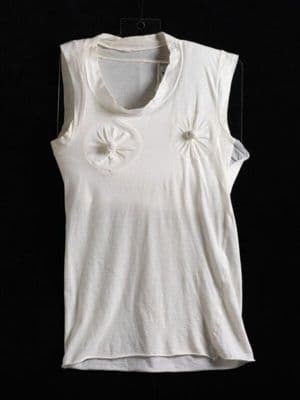

The black leather jacket's aggressive zips and hardware speak the same language of deliberate destruction as the white tee's precisely cut nipple holes—both garments weaponize the body through strategic exposure and armor. Where the jacket builds fortress-like protection before selectively revealing (those mint racing stripes soften nothing), the tee strips down to vulnerability then punctures it with calculated provocation.


Follow this garment wherever the graph leads
The black leather jacket's aggressive zips and hardware speak the same language of deliberate destruction as the white tee's precisely cut nipple holes—both garments weaponize the body through strategic exposure and armor. Where the jacket builds fortress-like protection before selectively revealing (those mint racing stripes soften nothing), the tee strips down to vulnerability then punctures it with calculated provocation.
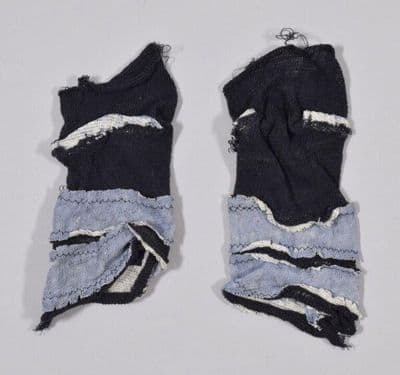
The mint-striped leather jacket and those shredded navy socks are separated by decades but united by punk's foundational grammar of deliberate destruction. Where the jacket channels punk's sleek, rebellious uniform—that gleaming black leather armor worn like a second skin—the socks embrace the movement's opposite impulse toward beautiful decay, their carefully orchestrated holes and frayed edges turning basic hosiery into sculptural ruins.
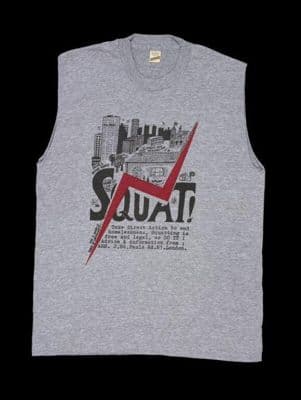
The black leather jacket with its mint green racing stripes carries punk's original DNA from the '70s — that calculated aggression of zippers, studs, and the kind of shoulders that announce you're ready for a fight. Four decades later, the heather gray tank translates that same rebellious energy into something more wearable but equally pointed: its jagged red slash cuts through urban imagery like a lightning bolt, turning a basic sleeveless tee into quiet provocation.
The black leather jacket's aggressive zippers and that defiant mint-green hair create the same visual rebellion as the grey lycra mini's body-conscious stretch—both garments weaponize the female form, just forty years apart. Where punk's leather armor announced "don't touch" through studs and hardware, this second-skin skirt whispers the same threat through its unforgiving fit that demands physical confidence.