1970s · 1980s · British
Designer
Malcolm McLaren and Vivienne Westwood
Production
artisan-craft
Material
cotton knit
Culture
British
Movement
Punk · Situationism
Influences
punk DIY aesthetic · situationist détournement
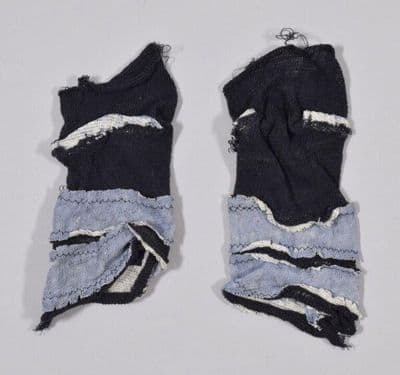
Two heavily distressed cotton knit socks displaying deliberate destruction as aesthetic statement. The navy blue sock features white striped bands and extensive fraying with loose threads creating textural chaos. The second sock combines light blue and white striped sections with black accents, showing similar intentional deterioration. Both pieces exhibit raw, unfinished edges and strategic holes that reveal the underlying knit structure. The distressing appears controlled rather than accidental, with tears positioned to create visual interest while maintaining basic sock form. This destruction technique transforms functional hosiery into punk fashion statements, embodying the anti-establishment ethos of early 1980s British subculture through deliberate garment deconstruction.
These two pieces speak the same language of beautiful destruction, separated by four decades and an ocean. The punk socks from '70s Britain, with their deliberate unraveling and exposed white cotton innards, established the grammar of strategic decay that would eventually migrate from underground clubs to suburban mall stores.


That shredded denim vest carries the same deliberate destruction as those punk socks from the '70s—both garments weaponize decay as a form of rebellion. Where the socks used strategic holes and unraveling seams to reject bourgeois propriety, the vest applies that same anarchic energy to American workwear, turning denim's blue-collar symbolism inside out with calculated fraying and distress.


Follow this garment wherever the graph leads

That shredded denim vest carries the same deliberate destruction as those punk socks from the '70s—both garments weaponize decay as a form of rebellion. Where the socks used strategic holes and unraveling seams to reject bourgeois propriety, the vest applies that same anarchic energy to American workwear, turning denim's blue-collar symbolism inside out with calculated fraying and distress.
The leather jacket's pristine asymmetrical zip and structured rebellion has traveled far from these shredded navy socks, held together by safety pins and defiant of every rule about what constitutes clothing. Both pieces weaponize destruction as design language — the jacket through its deliberate slashes and aggressive hardware, the socks through their complete unraveling into strips of fabric that refuse to stay put.
The mint-striped leather jacket and those shredded navy socks are separated by decades but united by punk's foundational grammar of deliberate destruction. Where the jacket channels punk's sleek, rebellious uniform—that gleaming black leather armor worn like a second skin—the socks embrace the movement's opposite impulse toward beautiful decay, their carefully orchestrated holes and frayed edges turning basic hosiery into sculptural ruins.
These two pieces speak the same language of beautiful destruction, separated by four decades and an ocean. The punk socks from '70s Britain, with their deliberate unraveling and exposed white cotton innards, established the grammar of strategic decay that would eventually migrate from underground clubs to suburban mall stores.