FASHIONPEDIA
Distressed Blue Denim Boyfriend Jeans with Rips
2010s · 2020s · American
Production
mass-produced
Material
denim
Culture
American
Movement
Grunge · Gorpcore
Influences
workwear denim tradition · punk DIY aesthetic
Mid-rise boyfriend jeans in medium-wash blue denim with deliberate distressing and ripped details at the knees and thighs. The jeans feature a relaxed, slouchy fit through the hips and thighs with rolled cuffs at the ankles. Multiple tears and frayed edges create the characteristic grunge aesthetic of intentionally worn and damaged clothing. The denim appears to be medium-weight cotton with natural fading patterns. Paired with a cropped floral bandeau top, the styling reflects the 1990s grunge movement's embrace of deconstructed, anti-fashion garments that rejected polished mainstream aesthetics in favor of deliberately disheveled, thrift-store inspired looks.
pantsregularmaxi
Connected To
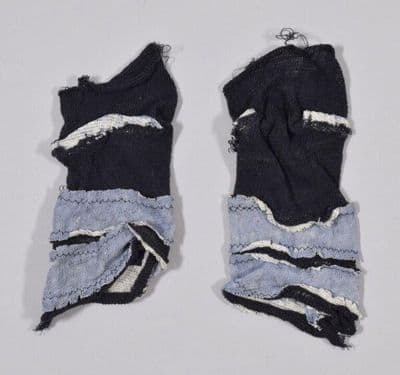
Influences·punk DIY aestheticFunction·protest-subculture
SHARED40 years · cross-culture · cross-category
These two pieces speak the same language of beautiful destruction, separated by four decades and an ocean. The punk socks from '70s Britain, with their deliberate unraveling and exposed white cotton innards, established the grammar of strategic decay that would eventually migrate from underground clubs to suburban mall stores.
Pull the Thread→
Follow this garment wherever the graph leads