2010s · 1980s · British
Designer
Malcolm McLaren and Vivienne Westwood
Production
ready-to-wear
Material
lycra
Culture
British
Movement
Punk · New Romanticism · Athleisure
Influences
punk aesthetic · 1980s body-conscious silhouette
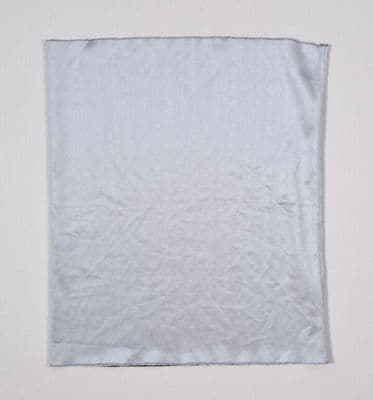
A light grey lycra mini skirt displaying the characteristic stretch and body-conscious silhouette of early 1980s club fashion. The fabric appears to have a matte finish typical of lycra blends from this period, with visible wrinkles and creases that demonstrate the material's elasticity and form-fitting properties. The garment shows minimal construction details, relying on the stretch properties of the synthetic fabric rather than traditional tailoring techniques. This piece represents the punk-influenced aesthetic of McLaren and Westwood's 'Hobo-Punkature' collection, where synthetic materials and body-conscious cuts challenged conventional fashion norms of the early 1980s subcultural scene.


The moto jacket's aggressive zippers and that defiant stance channel punk's original middle finger to convention, while the grey lycra mini reduces rebellion to its most elemental form—the simple transgression of showing skin. What connects them across four decades isn't just attitude but punk's core insight: that the most radical act is refusing to dress like a good girl.


Follow this garment wherever the graph leads
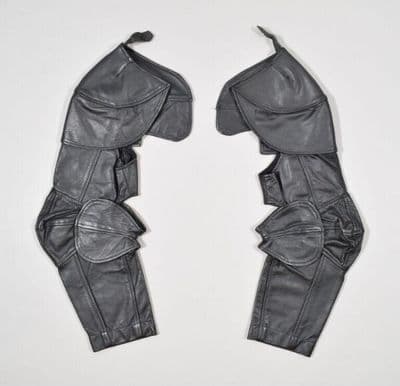
These pieces trace the evolution of subcultural armor from literal to psychological. The 1980s leather waistcoat, with its theatrical shoulder guards and medieval flourishes, belongs to the New Romantic movement's fantasy of protection through elaborate dress—each buckle and strap a declaration of otherness.
The moto jacket's aggressive zippers and that defiant stance channel punk's original middle finger to convention, while the grey lycra mini reduces rebellion to its most elemental form—the simple transgression of showing skin. What connects them across four decades isn't just attitude but punk's core insight: that the most radical act is refusing to dress like a good girl.
That black leather jacket carries the full weight of punk's original armor—thick, uncompromising, built to last through decades of rebellion—while the grey lycra mini skirt represents punk's strange afterlife as fast fashion. Where the leather promised permanence and protection (notice how it still holds its structure, the way real biker jackets age into themselves), the lycra offers disposability dressed up as edge—punk's snarl reduced to a stretchy whisper.
The black leather jacket's aggressive zippers and that defiant mint-green hair create the same visual rebellion as the grey lycra mini's body-conscious stretch—both garments weaponize the female form, just forty years apart. Where punk's leather armor announced "don't touch" through studs and hardware, this second-skin skirt whispers the same threat through its unforgiving fit that demands physical confidence.