SMITHSONIAN
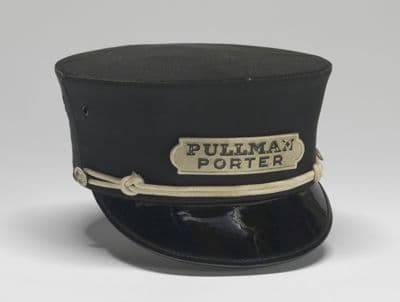
Black Wool Pullman Porter Uniform Cap
Wartime / Utility Fashion · 1960s · American
Designer
Pullman Company
Production
mass-produced
Material
wool cloth
Culture
American
Influences
military service cap styling · railroad uniform tradition
A black wool uniform cap with a structured crown and short black patent leather visor. The cap features a cream-colored band around the base with gold lettering reading 'PULLMAN PORTER' and decorative gold cord trim. The crown maintains a cylindrical military-style shape typical of service industry uniforms. The patent leather visor provides a crisp, professional appearance while the wool construction offers durability for daily wear. This cap represents the standardized uniform requirements of the Pullman Company, which employed African American porters on luxury railroad cars throughout the mid-20th century, making it both a piece of transportation history and African American labor heritage.
hat
Connected To
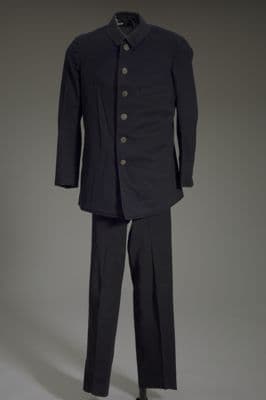
Designer·Pullman CompanyFunction·workwear
SHARED50 years · cross-category
These two pieces of Pullman porter livery reveal how corporate uniforms evolved from theatrical pomp to streamlined efficiency. The Edwardian coat, with its military-inspired double-breasted front and gleaming brass buttons marching down the chest, was designed to project the grandeur of luxury rail travel—porters as uniformed ambassadors of first-class service.
Text82%
Image75%
Entity54%
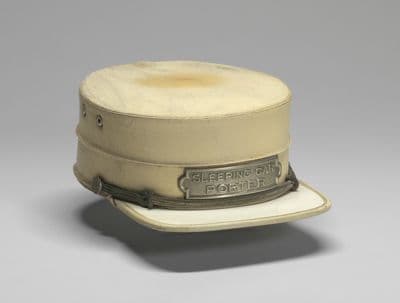
Worn with·uniform jacketWorn with·uniform trousersFunction·workwear
SHARED40 years
These two porter caps trace the evolution of American service uniform design across four decades of social upheaval. The earlier cream leather cap with its crisp Art Deco lettering and substantial brim speaks to the 1920s obsession with sleek modernity and the dignity of skilled labor, while the later black wool version—with its more utilitarian metal nameplate and streamlined silhouette—reflects wartime austerity and the shift toward mass-produced efficiency.
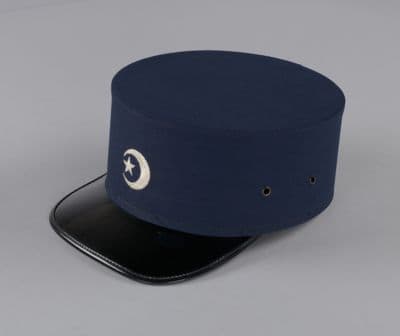
Worn with·uniform jacketWorn with·uniform trousers
SHARED10 years · cross-culture
These two caps tell the story of parallel uniformed dignity in mid-century America, where the crisp geometry of service headwear carried vastly different social weight. The navy military cap with its gleaming patent visor and understated crescent insignia represents earned authority and respect, while the Pullman porter's cap—with its brass nameplate and utilitarian black wool—was the crown of what was considered prestigious work within the constraints of segregated labor.
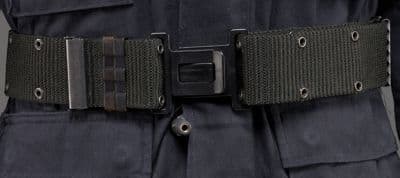
Worn with·uniform jacket
SHARED40 years · cross-culture · cross-category
Text53%
Image
Pull the Thread→
Follow this garment wherever the graph leads