SMITHSONIAN
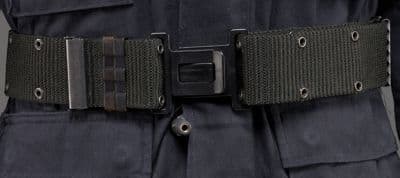
Olive Green Nylon Military Utility Belt
Wartime / Utility Fashion · 2000s · African American
Production
mass-produced
Material
nylon webbing
Culture
African American
Movement
Hip-Hop Fashion
Influences
military utility belt · hip-hop fashion
A heavy-duty military-inspired utility belt constructed from olive green nylon webbing with black plastic hardware. The belt features a substantial black plastic buckle with geometric detailing and multiple attachment points with metal grommets along its length. The webbing appears to be approximately two inches wide with reinforced stitching at stress points. Additional black fabric pouches or holders are visible, suggesting functional storage capacity. The construction emphasizes durability and utility over decoration, with the matte finish and tactical styling reflecting early 2000s streetwear aesthetics that drew heavily from military surplus and hip-hop culture's adoption of utilitarian fashion elements.
belt
Connected To
Influences·hip-hop fashion
SHARED10 years · cross-culture · cross-category
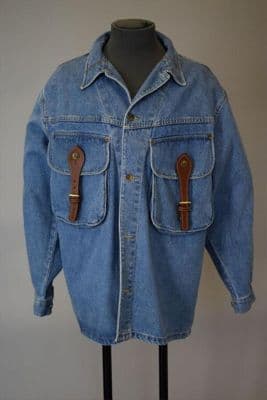
That oversized denim jacket with its brown leather tab closures and the olive webbing belt both carry the DNA of military surplus reimagined through hip-hop's lens—one softened into streetwear luxury, the other staying true to its tactical roots. The jacket's exaggerated proportions and utilitarian pocket details echo the same aesthetic hunger for authentic gear that made military webbing belts a cornerstone of '90s urban style.
Text54%
Image67%
Entity37%
Movement·Hip-Hop FashionFunction·protest-subculture
SHARED10 years · cross-culture · cross-category
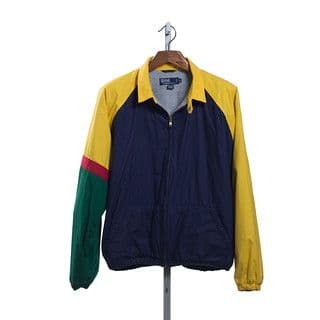
That windbreaker's navy-and-yellow color blocking carries the same utilitarian DNA as the military webbing belt below it, both speaking the language of function-first design that hip-hop borrowed and transformed in the '90s. The jacket's nylon shell echoes the belt's tactical materials, but where the military gear was built for genuine utility, the windbreaker translates that aesthetic into street swagger—same tough-guy semiotics, different battlefield.
Movement·Hip-Hop FashionFunction·protest-subculture
SHARED10 years · cross-culture · cross-category
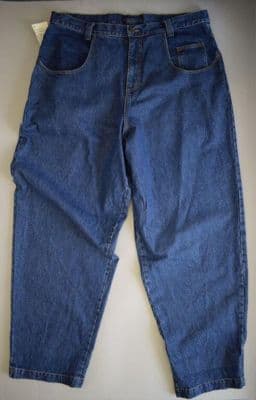
The military webbing belt's utilitarian swagger—that chunky olive nylon with its no-nonsense buckle and grommets—found its way into hip-hop's uniform through the same logic that made baggy jeans revolutionary. Both pieces reject the fitted, polished aesthetic of mainstream fashion in favor of function-first design that doubles as defiance: the belt's tactical readiness and the jeans' deliberately oversized silhouette both signal allegiance to communities that value authenticity over aspiration.
SMITHSONIAN
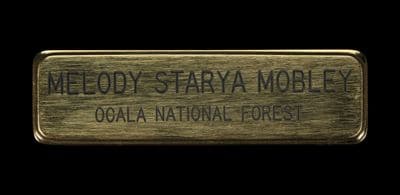
This is not a garment - it's a brass name badge/nameplate, which is an accessory/identification item, not clothing or fashion. · 1980s
SMITHSONIAN
Wartime / Utility Fashion · 2000s
Worn with·uniform jacketTechnique·metalwork
SHARED20 years · cross-culture · cross-category
That brass Forest Service nameplate and olive military webbing belt represent two sides of America's uniformed authority — one civilian, one martial — but both engineered for durability over decades of hard use. The nameplate's hefty brass construction and block lettering mirror the belt's no-nonsense nylon weaving and utilitarian hardware, each designed to withstand whatever the wearer's job demands.
Pull the Thread→
Follow this garment wherever the graph leads