V&A
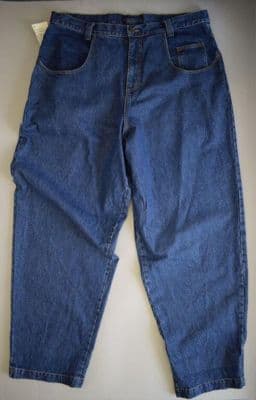
Indigo Cotton Denim Baggy Hip-Hop Jeans
1990s · 1990s · American
Designer
Karl Kani
Production
ready-to-wear
Material
cotton denim
Culture
American
Movement
Hip-Hop Fashion · Hip-Hop
Influences
hip-hop street style · prison uniform proportions
These baggy denim jeans exemplify 1990s hip-hop fashion with their dramatically oversized silhouette and relaxed fit through the legs. The indigo cotton denim shows typical five-pocket construction with contrast topstitching. The waistband sits at natural waist height with a standard button fly closure. The leg opening appears wide and loose, creating the characteristic billowing shape popular in urban streetwear. The proportions reflect the era's preference for anti-fitted clothing that rejected the body-conscious styles of the 1980s. Karl Kani was a pioneering African American designer who helped bring hip-hop aesthetics into mainstream fashion during this period.
pantsloose fitfloor length
Connected To
Movement·Hip-Hop FashionFunction·protest-subculture
SHARED10 years · cross-culture · cross-category
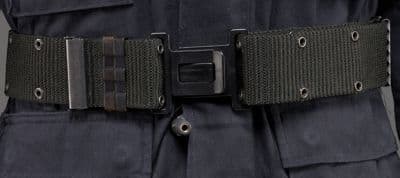
The military webbing belt's utilitarian swagger—that chunky olive nylon with its no-nonsense buckle and grommets—found its way into hip-hop's uniform through the same logic that made baggy jeans revolutionary. Both pieces reject the fitted, polished aesthetic of mainstream fashion in favor of function-first design that doubles as defiance: the belt's tactical readiness and the jeans' deliberately oversized silhouette both signal allegiance to communities that value authenticity over aspiration.
Echoes Across Time

Pull the Thread→
Follow this garment wherever the graph leads